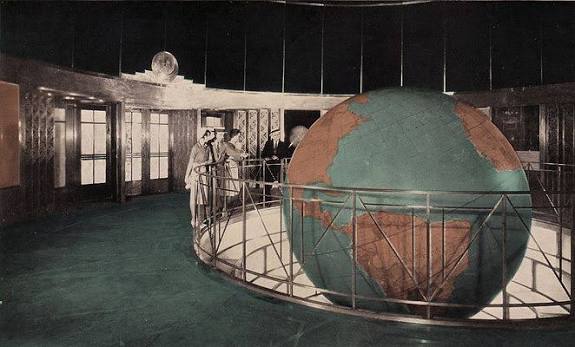
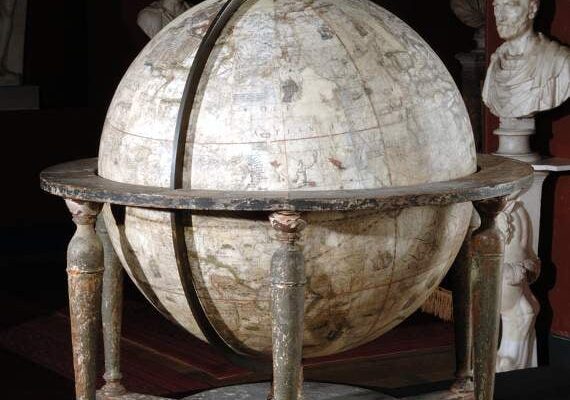
The history of Rand McNally globes spans over a century of American cartography, educational publishing, and design.
Rand McNally was founded in Chicago in 1868 by William Rand and Andrew McNally, initially focusing on railroad tickets and timetables.
The company expanded into map printing in 1872 using cost-effective wax engraving. By 1880, they officially branched out into geography textbooks, maps, and globes.
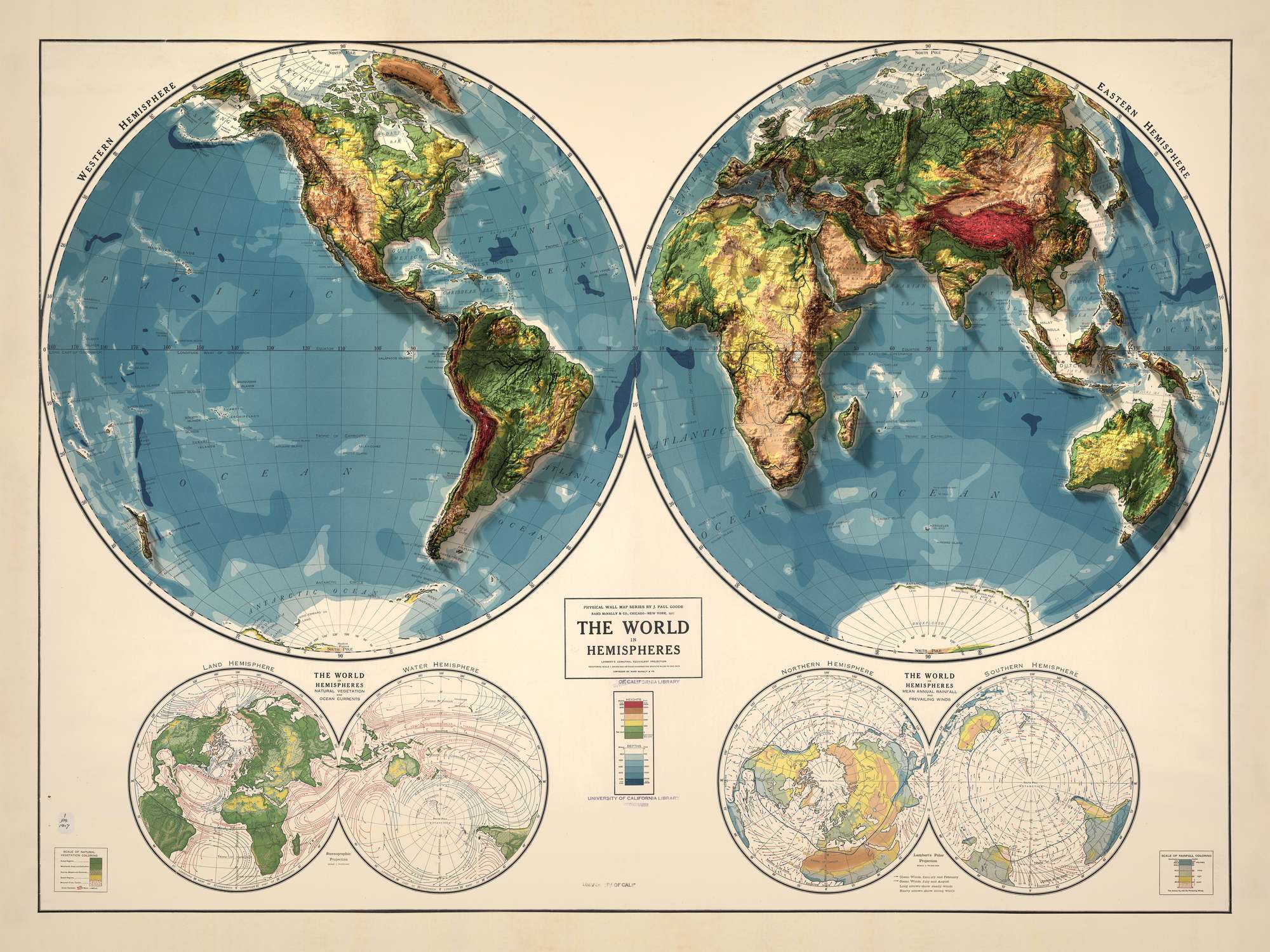
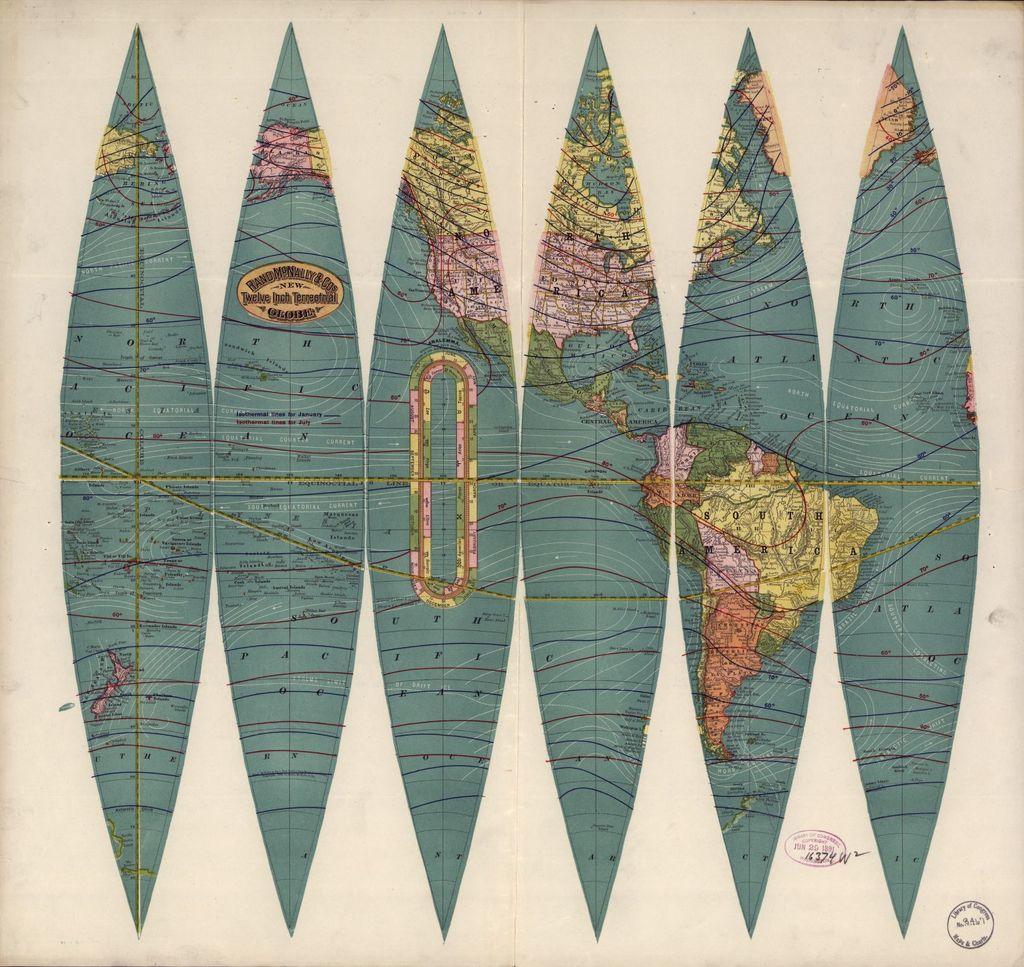
The company produced its first major terrestrial globes (such as the 12-inch terrestrial model) around this period, establishing their reputation with innovations like printed isothermal lines (lines of equal temperature) and submarine telegraph cables. They also supplied globe “gores” (the printed map segments) to other Chicago-area manufacturers.
By 1894, they introduced larger floor globes, including an 18-inch terrestrial globe, cementing their presence in American schools, libraries, and princely or corporate offices.
 They also created custom and art Globes in the 1930s. Rand McNally crafted special commissioned pieces, including massive art globes for aviation landmarks like Pan American Airways. Iconic!
During the mid-20th century, collaboration with astronomers like Oliver J. Lee led to celestial globes like the 9-inch Galileo in the 1950s.
In the 1960s, fueled by the Space Age and the Apollo missions, Rand McNally produced detailed 12-inch lunar globes depicting craters, maria, and mountain ranges from astronomical surveys.
They also introduced iconic mid-century modern “World Portrait” globes featuring matte light-blue oceans, raised tactile topography carved into the continents, and multi-axis metal stands. In 1967, they even created massive 6-foot institutional and library globes with hand-painted 3D features.
Today they are a classroom staple. Throughout the 20th century, models like the Beginner’s Political Globe (featuring markable water-soluble surfaces for students) were standard fixtures in schools.
Because political borders constantly shifted, vintage Rand McNally globes now serve as historical snapshots of the geopolitical eras in which they were printed.
Images :
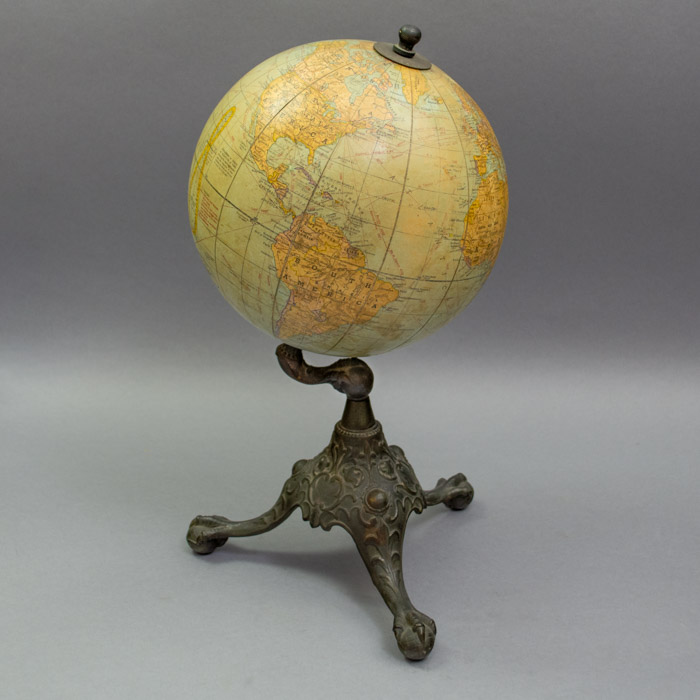
Globe, American, Rand McNally, Terrestrial, 8-Inch Table Globe, Tripod Iron Stand, Chicago, Late 1920s – George Glazer Gallery (sold).