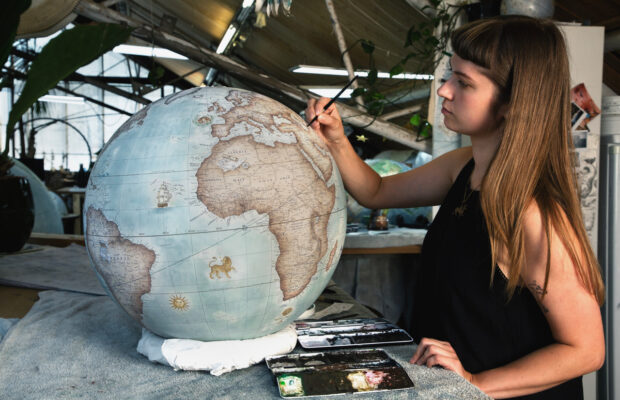
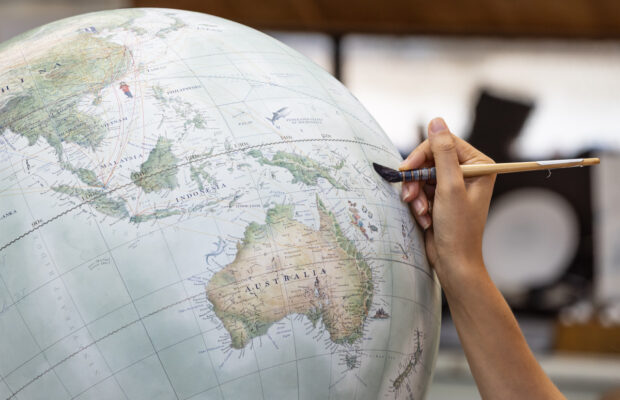
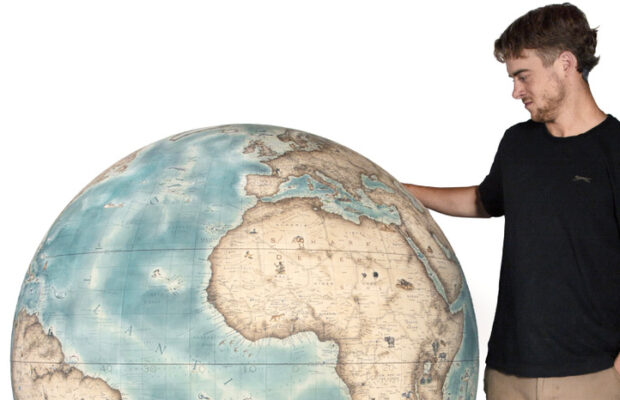
Pictured is a 50cm Sea Green globe.
You can book in for any sizing 22cm – 127cm diameter here (linked online) and pair with any style of base.
Other colour suggestions are : Prussian Blue, Ocean-Shaded Mint Green – or similar colouring. Gagarin and Cassini colouring is priced higher and not recommended.
Illustrations are not limited to what is shown, we can do any variation, add or change illustrations, and add more illustrations around the world. You can have us change the style of travel routes, colouring of the routes and highlighted cities etc – everything is made bespoke to order.
You can see an example (linked here) in 22cm diameter sizing and in the colouring Ocean-Shaded Mint Green.
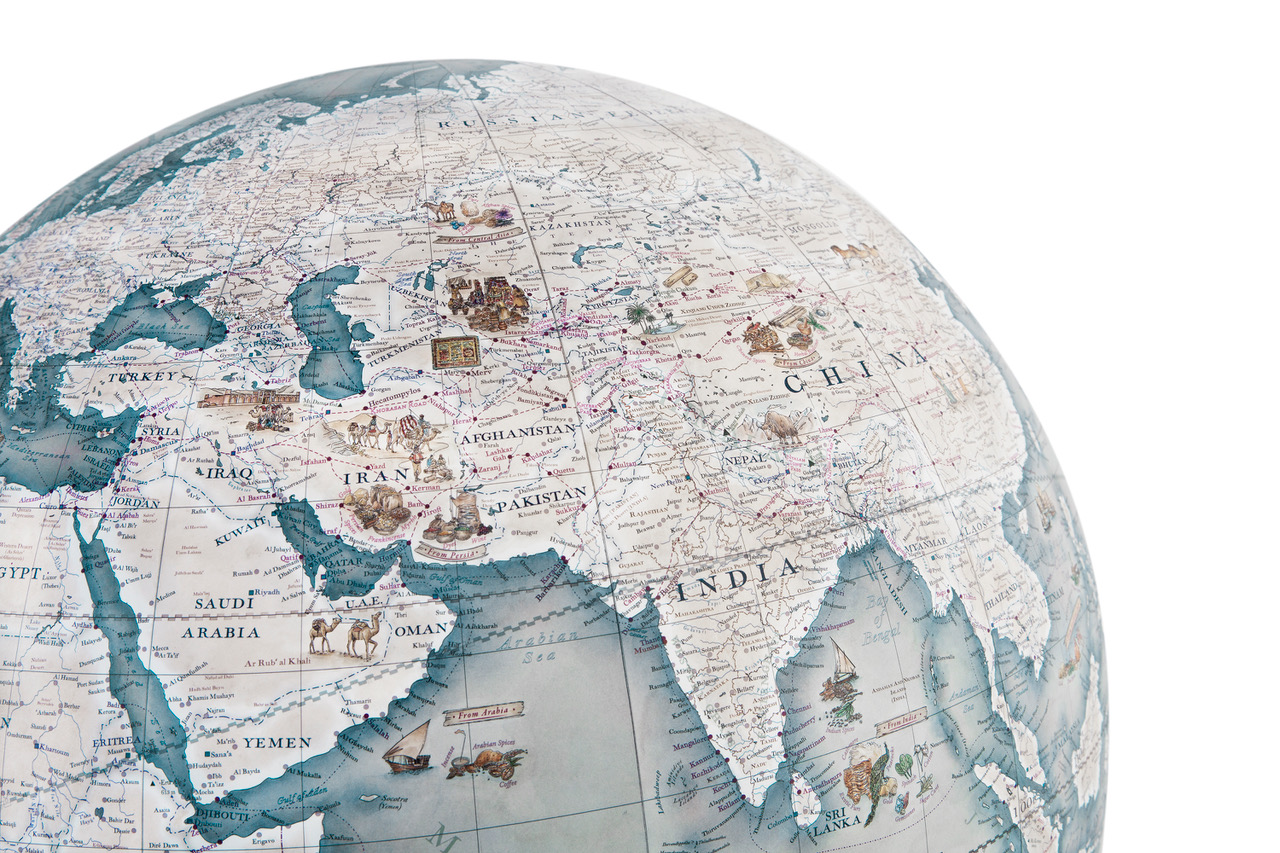

The Silk Road was a network of ancient trade routes that connected east and west for more than 1,500 years. Spanning almost all of Asia, with routes going from Europe, through the Middle East, Central Asia and China, crossing dangerous and daunting landscapes from precarious mountain ranges to unforgiving deserts. These routes were not a single road but a complex web of interconnected paths that spanned thousands of miles, both overland and by sea, and they were instrumental in shaping the civilisations along the way. Smaller trade roads and sea routes would branch off to connect even further places such as South East Asia, Northern Europe and Africa. It played a significant role in facilitating cultural exchange and the trade of goods, including silk, spices, precious metals and more. The historical routes on this globe are highlighted with modern towns and cites with relative heritage alongside ruins and ancient sites, which in their heyday contributed to the profound impact the Silk Road had on the development of societies and remains a symbol of cross-cultural interaction.

Marco Polo is illustrated as he is regarded as one of the world’s most influential travellers of the medieval period. At the age of seventeen, along with his uncle and father, he travelled overland across much of Asia as part of a diplomatic mission for Pope Gregory X. With much of the journey making use of the well worn routes of the ancient silk roads, the Polos ventured through modern day Turkey, Iran, Afghanistan and China, reaching the court of Kublai Khan after three and a half years. The Khan took a liking to Marco, and the Polos would serve as members of the court as emissaries, conducting various diplomatic missions that took the Polos further into South East Asia.
Marco Polo’s Ships are shown along the sea route. By 1291 the Polos had spent 17 years in the court of the khan and were ready to return home, The Khan was not happy to release them from service, but reluctantly agreed on condition they escort a mongol princess who was set to marry the mongol ruler of Persia. They Returned to Hormuz by Sea escorted with a fleet of fourteen Chinese ships, and along the way they stopped at a number of regions that were paying tribute to the Khan. From Hormuz, the Polos then returned home, being escorted by Mongol cavalry until they safely reached Trebizond (Trabzon). Sailing over the Black Sea to Constantinople (Istanbul) and then home to Venice which they reached around 1295.
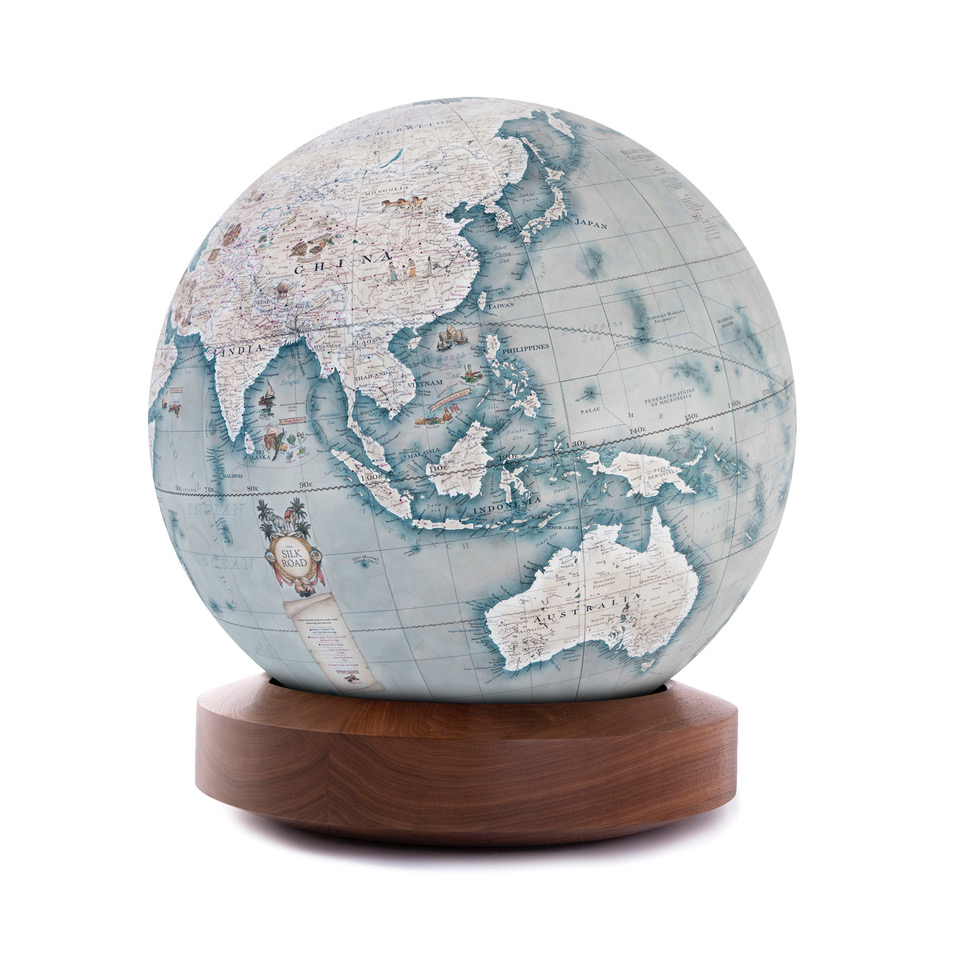


Spices are illustrated. Silk was not the only thing traded along these routes, alongside various other textiles the Silk Roads saw the exchange of paper, gemstones, porcelain, raw materials, livestock and even wild exotic animals such as peacocks, but one of the most important traded goods were spices. Spices from the far east would find their way to Europe, and the monopoly that would eventually arise from their trade would encourage European nations to set sail in attempts to find new routes to the fabled ‘spice islands’ –
Mongolian Horses are illustrated. The native horse breed of Mongolia is purported to be largely unchanged since the time of Genghis Khan. Mongolian horses are generally smaller and stockier than other breeds, but their hardiness and stamina made them a formidable essential to the nomadic tribes of north Asia, who developed their entire cultures around life on horseback. These Horses were instrumental to the Mongol conquests of almost all of Asia, allowing them to cover vast distances quickly, launch surprise attacks and retreat with speed.
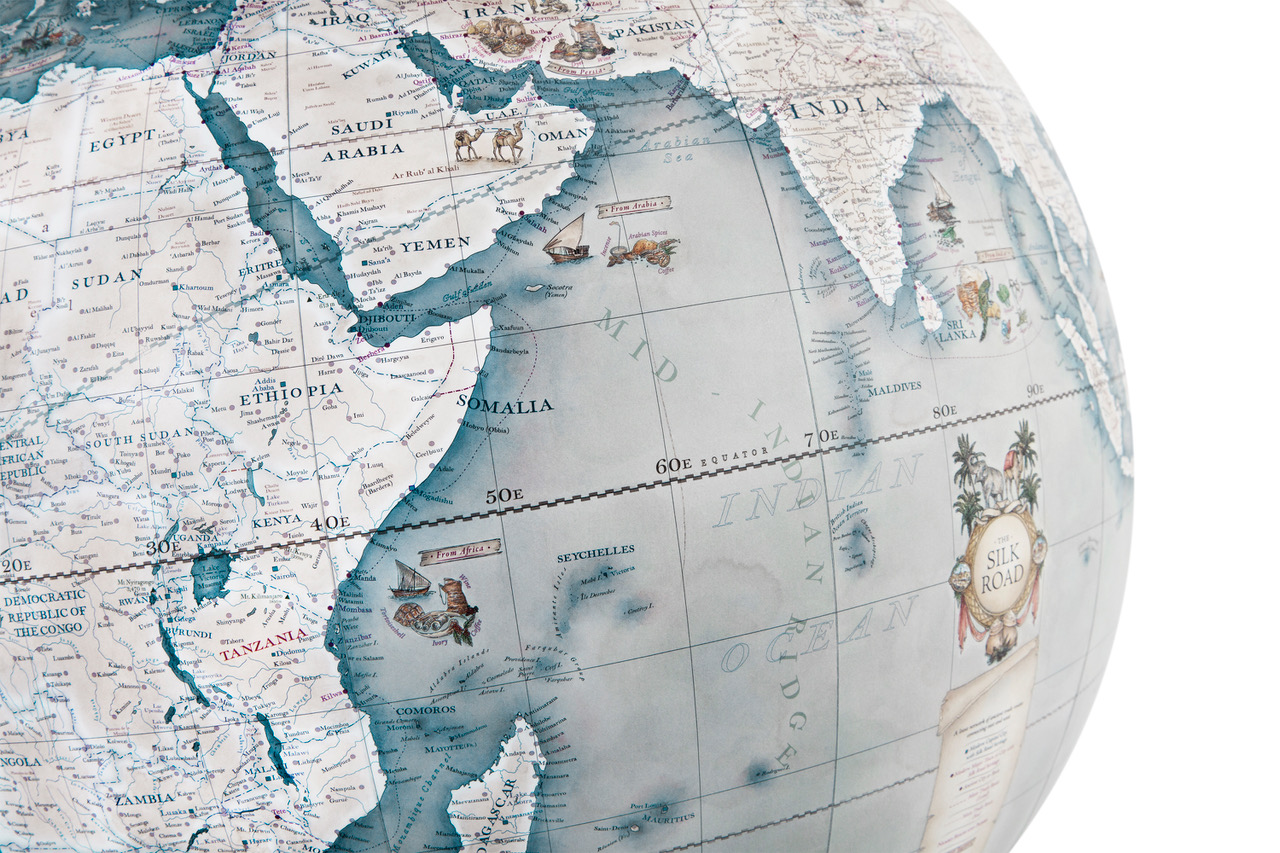


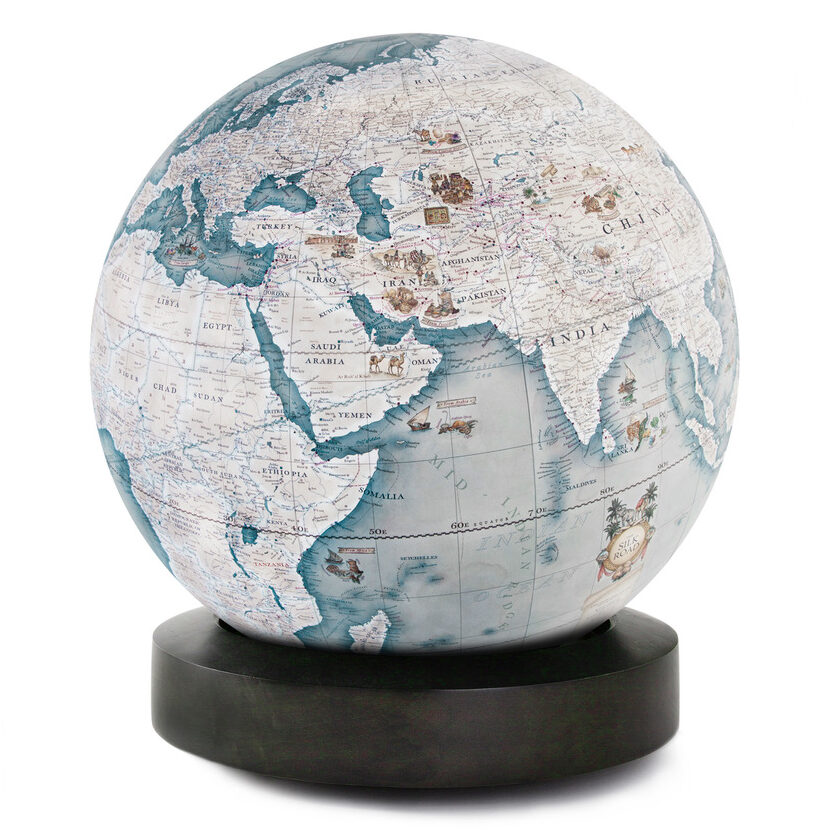


Globe spins 360 degrees in a fluid motion by hand in all directions and can be easily lifted from its base. Commission also includes an engraving.
We ship worldwide.