Voyages of Discovery – 22cm Desktop Globe
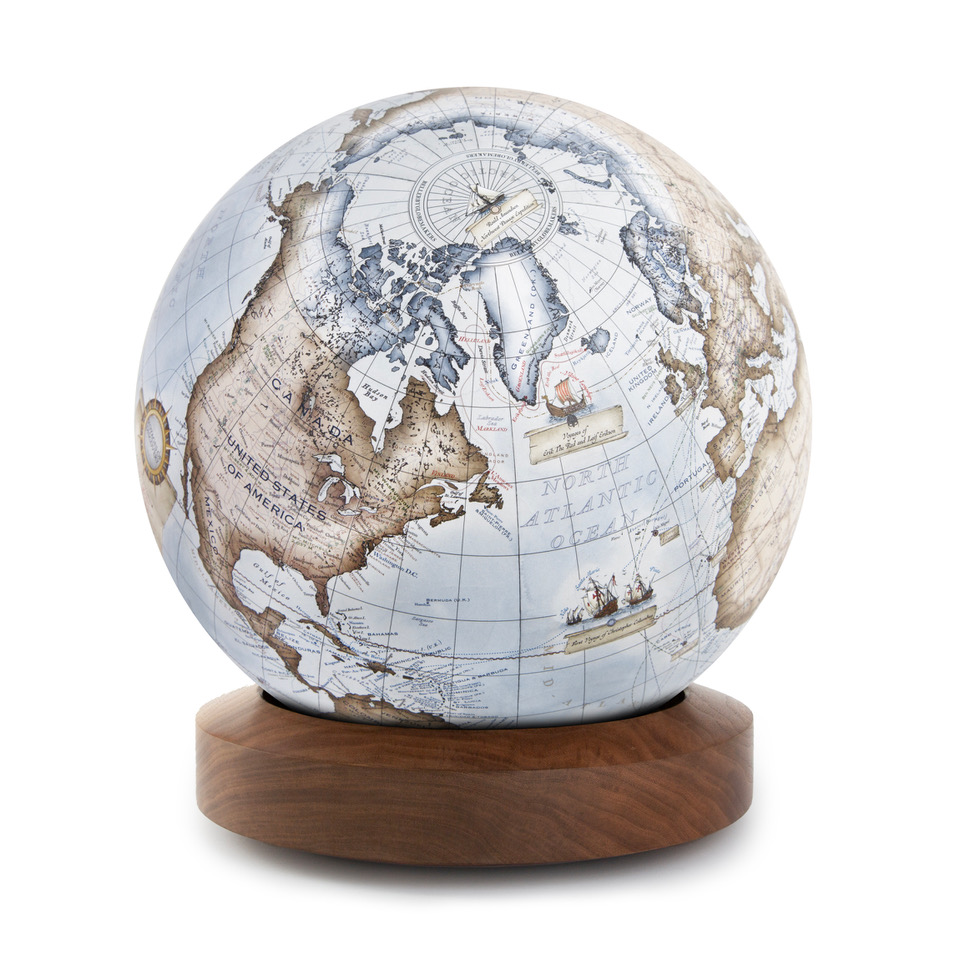
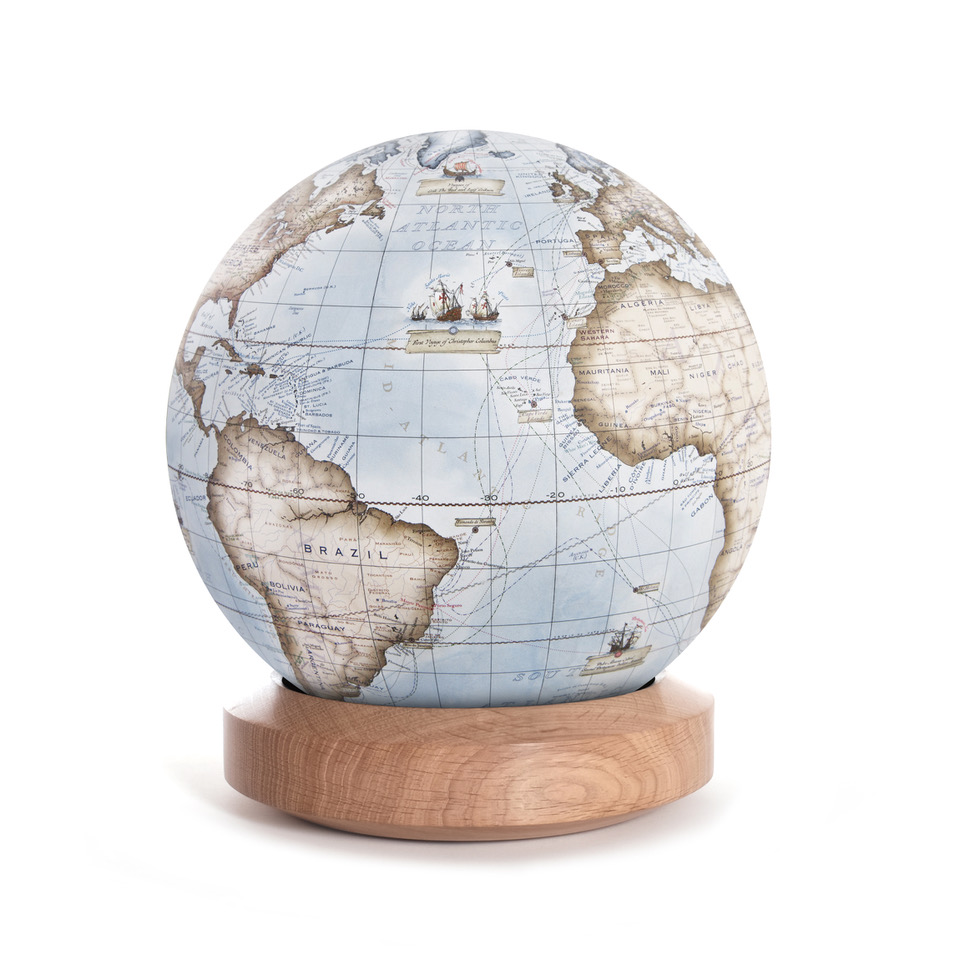
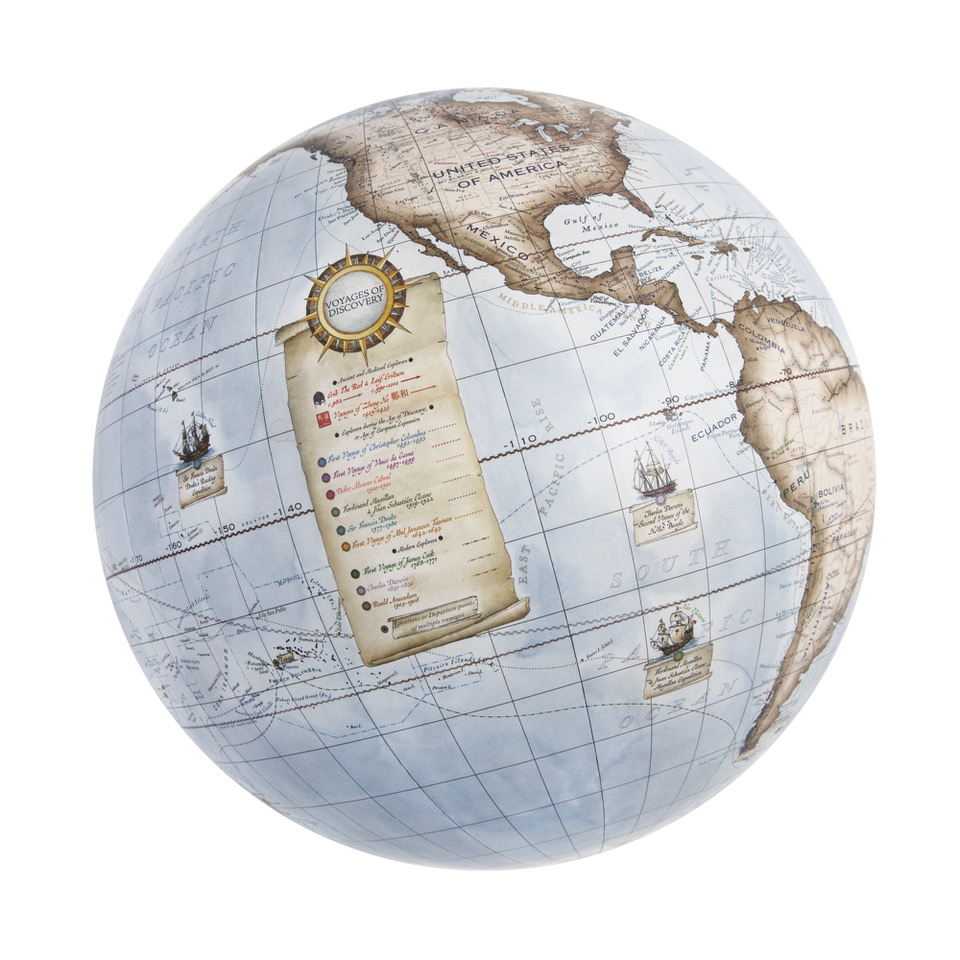
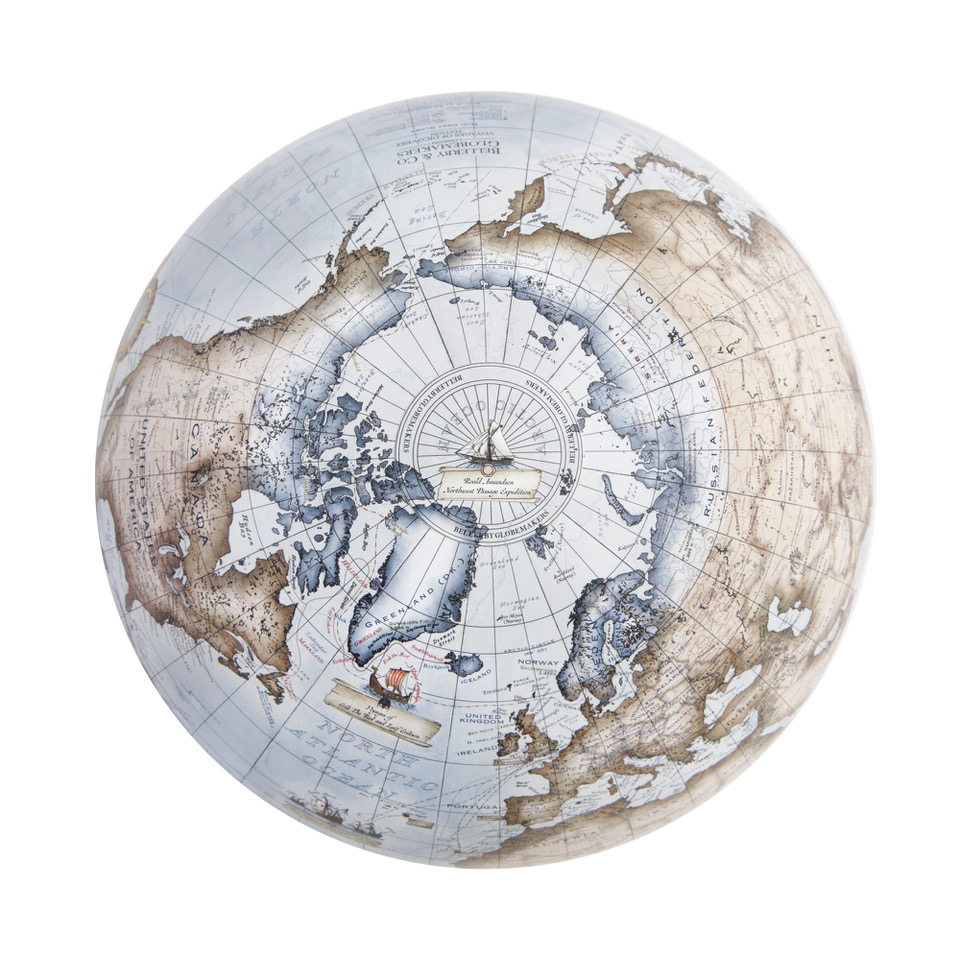
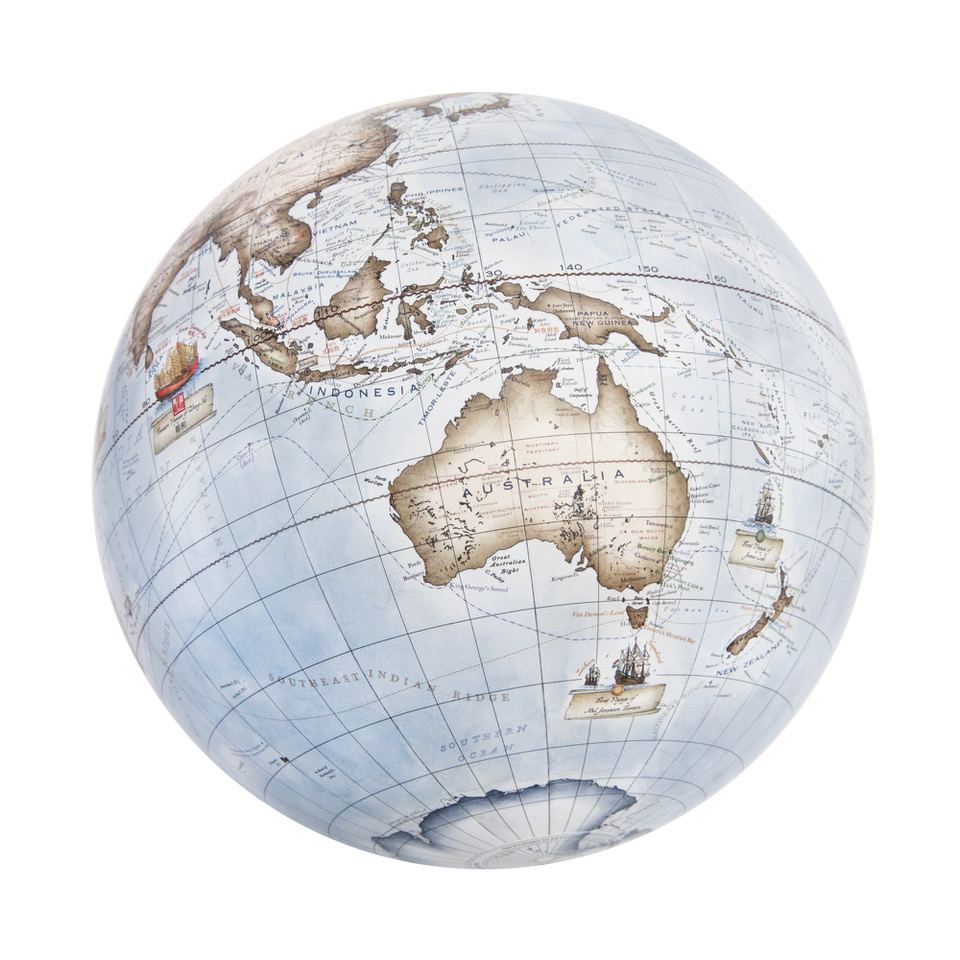
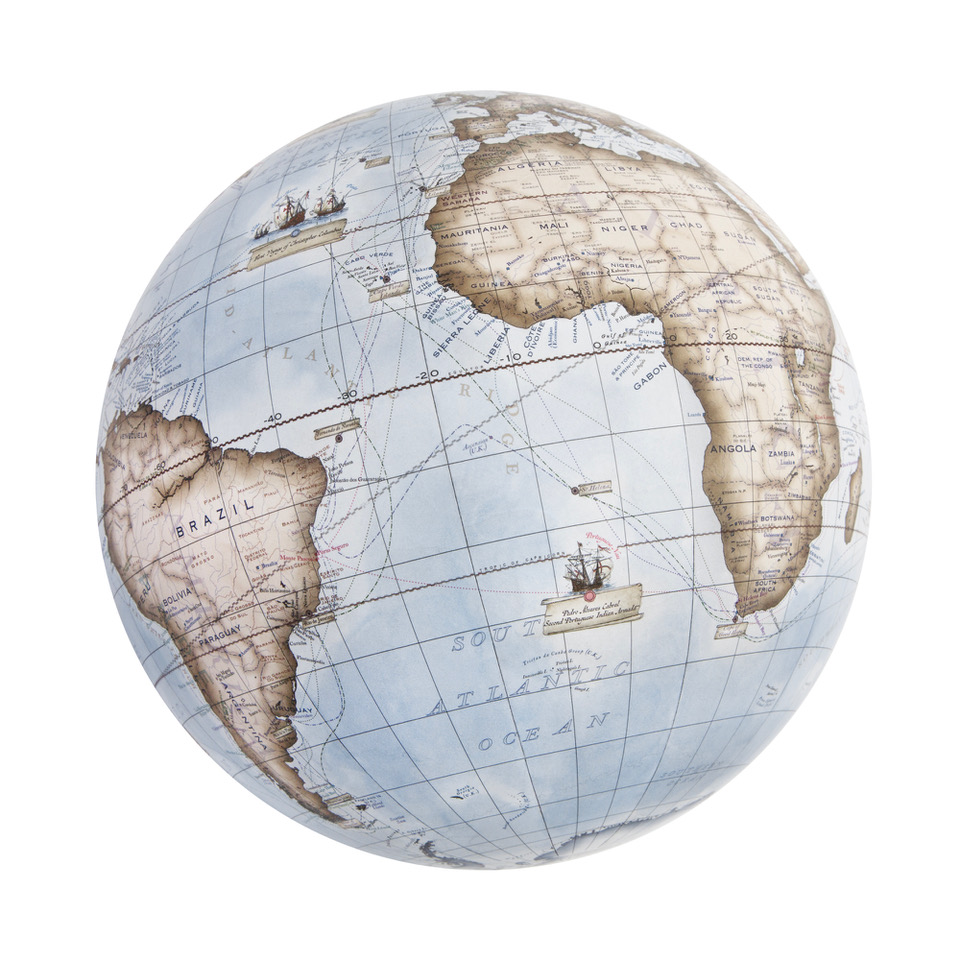
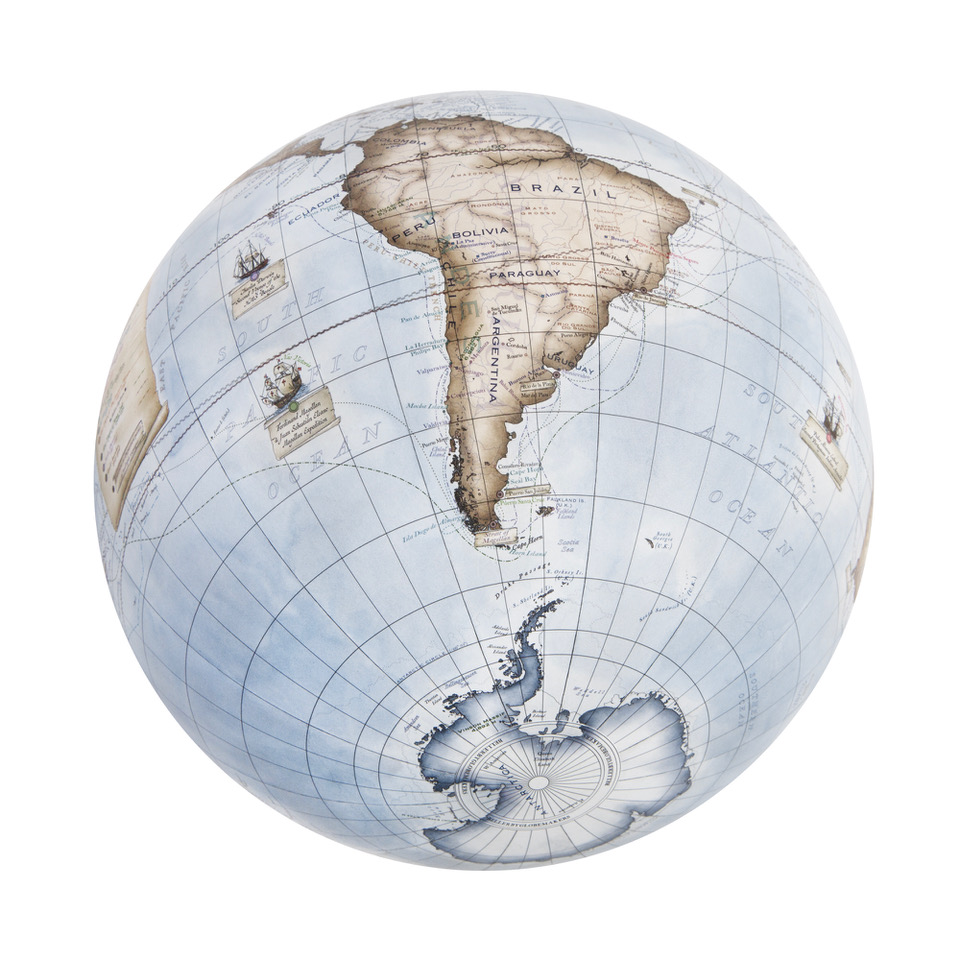
A very special edition globe featuring detailed information on famous explorers, their routes, and their ships.
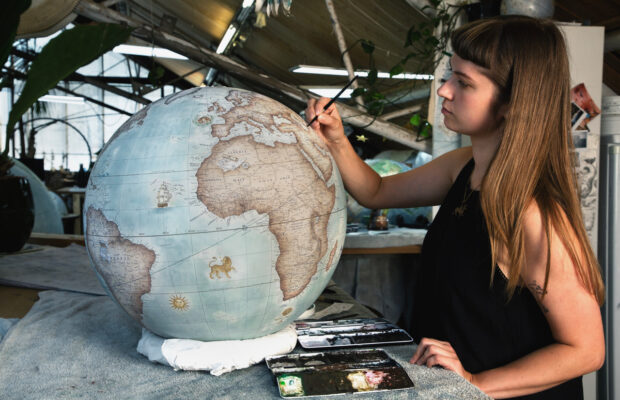
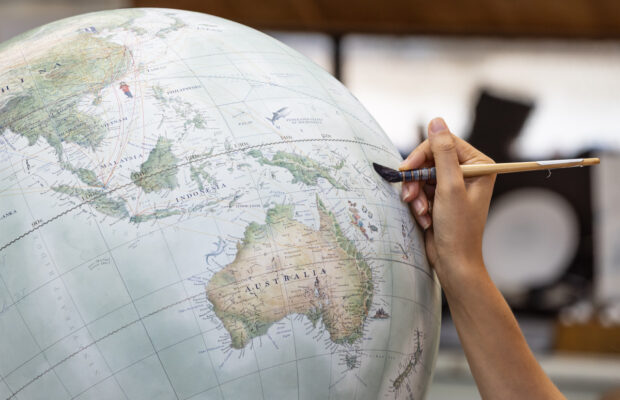
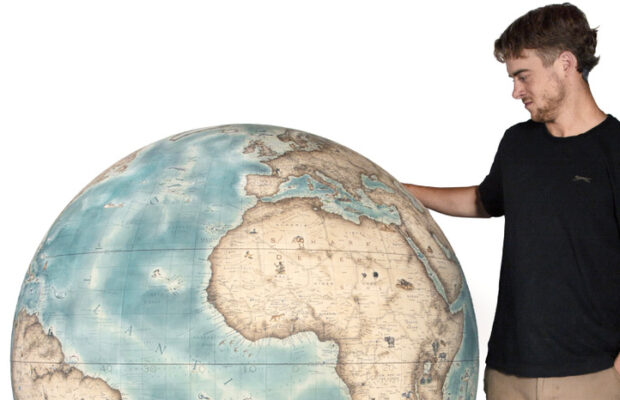
Examples shown are the 22cm Mini Desk Globe but we can add personalisation like this on any sized globe including our large floor standing style. Handmade and hand painted – a bespoke version or variation of this globe can also be ordered – and with any colour ocean / land you see across our collections.
Though we have a set suggestion in place for what illustrations are where – this is optional and as always we can design the globe as you would like it.
Shown on Walnut with a natural finish, Oak with a natural finish and London Plane with a dark stain.

Suggested personalisation includes :
Erik the Red and Leif Erikson
Around 982 AD, Norse explorer Erik the Red, after being exiled from Norway and later Iceland, decided to explore the lands of the west. He and his men rounded the southern cape of Greenland, establishing settlements there and becoming the first europeans to do so, Erik the Red is credited with giving the country its name, Grœnland ‘Green land’.
His son, Leif Erikson, is believed to have explored parts of North America around 1000 AD, about 500 years before Christopher Columbus set foot in the Caribbean. Along the way, Erikson sighted three lands named Helluland (possibly Baffin Island), Markland (probably Labrador) and Vinland (possibly Newfoundland). Leif’s successful expedition encouraged other norsemen to settle the area, becoming the fist Europeans to do so, and a Norse settlement has been excavated at the northernmost tip of Newfoundland at L’Anse aux Meadows.
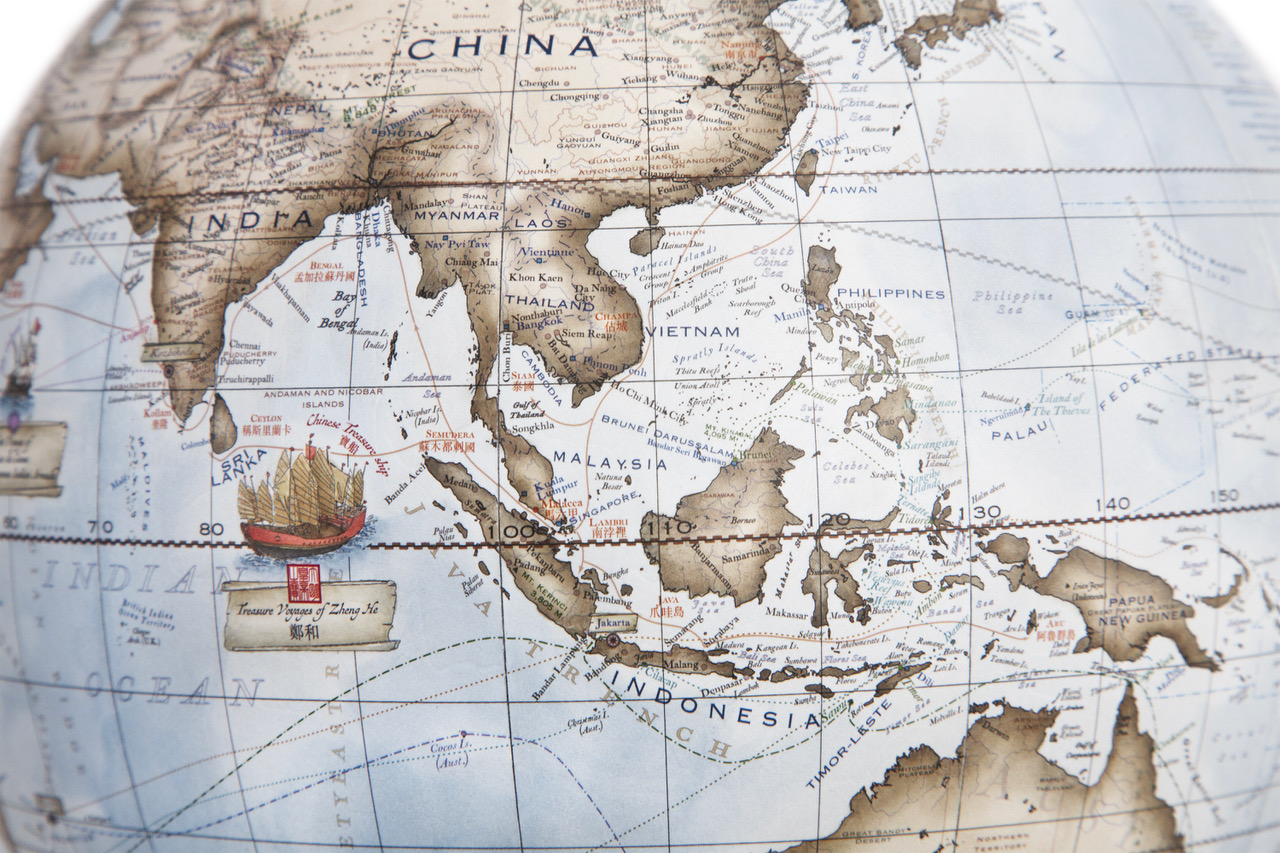
Zheng He
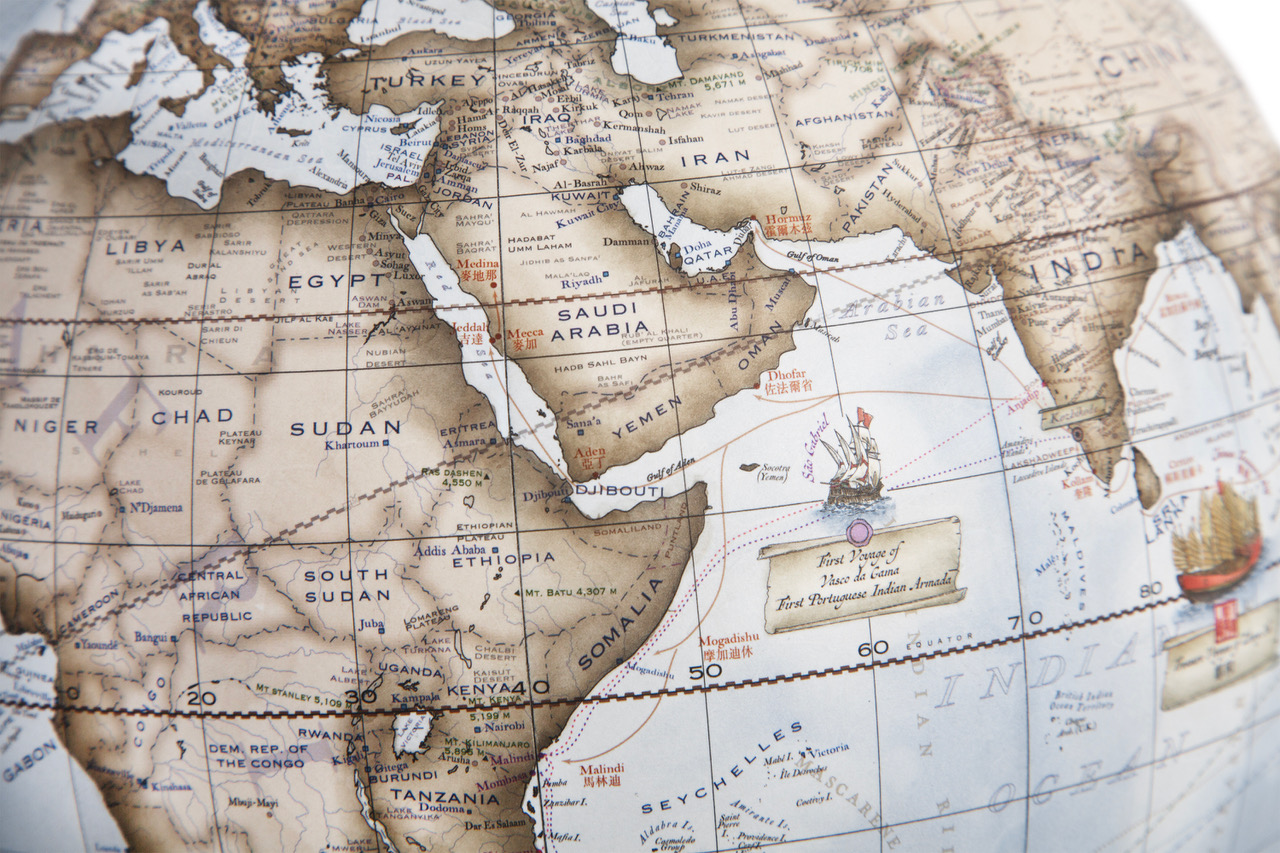
During the Ming Dynasty in the early 15th century, Chinese Admiral Zheng He was commissioned by the emperor to lead a series of seven epic maritime expeditions. Sailing colossal treasure ships that dwarfed most other vessels of the time, he explored parts of South and Southeast Asia, India, the Middle East and East Africa. his voyages, spanning from 1405 to 1433, were not merely exploratory but also diplomatic, establishing Chinas influence and fostering trade relationships across the Indian Ocean. Exchanging luxuries of china such as porcelain and silk, the expeditions brought back many trophies from more than thirty kingdoms, including exotic animals such as ostriches, zebras, camels and a giraffe.
Christopher Columbus
In 1492, Christopher Columbus embarked on a historic voyage across the Atlantic, sponsored by Spain. Seeking a western route to Asia, he instead reached the islands of the Caribbean, landing in the Bahamas, Columbus initiated contact with the Americas. Despite his misconceptions about his destination, his journey marked a pivotal moment in history, ushering in the age of exploration and fundamentally reshaping global trade, culture and understanding of geography. Columbus’s voyage laid the groundwork for further exploration and the eventual colonisation of the Americas.
Vasco da Gama
In 1497, Portuguese explorer Vasco da Gama embarked on a groundbreaking voyage to find a direct sea route to India. Sailing around the Cape of Good Hope, he successfully reached the shores of Calicut in 1498, opening a lucrative maritime route for spice trade. Da Gama’s navigation of the treacherous waters around the southern tip of Africa marked a pivotal moment in global exploration and established Portugal as a major player in the lucrative spice trade.
Charles Darwin
Charles Darwin embarked on the Second Voyage of the HMS Beagle in 1831, initiating a transformative voyage that shaped his groundbreaking theory of evolution. Over five years, Darwin explored diverse ecosystems, from the Galápagos Islands to South America. His meticulous observations of species variations and adaptations laid the foundation for “On the Origin of Species,” published in 1859, revolutionising our understanding of the natural world.
Pedro Álvares Cabral
In 1500, Portuguese explorer Pedro Álvares Cabral led a fleet to chart a route to India. Accidentally veering westward, he stumbled upon the coast of present-day Brazil, marking the European discovery of South America. Cabral claimed the newfound land for Portugal, setting the stage for subsequent colonisation.
Ferdinand Magellan
Ferdinand Magellan’s historic circumnavigation, beginning in 1519, aimed to find a westward route to the Spice Islands. Though Magellan himself perished in the Philippines, his expedition continued under Juan Sebastián Elcano. Completed in 1522, and though reaching Europe with a leaking ship and only a handful of crew, the successful crossing of the Straight of Magellan had opened up a new route to the Pacific and had confirmed the conception of the world as a globe.
Sir Francis Drake
Sir Francis Drake embarked on his circumnavigation in 1577, becoming the second man to achieve this feat. Commanding the Golden Hind, he sought to disrupt Spanish dominance and explore the Pacific. Drake navigated the treacherous Strait of Magellan, raided Spanish ports along the west coast of South America, and crossed the Pacific. His journey included a stop in the Moluccas for spices before circumnavigating Africa’s Cape of Good Hope. Completing the circumnavigation in 1580, Drake’s expedition bolstered English prestige, contributed to naval advancements, and solidified his legacy as a legendary explorer and privateer.
Abel Janszoon Tasman
In 1642, Dutch explorer Abel Janszoon Tasman embarked on a significant voyage commissioned by the Dutch East India Company. Tasman set sail to discover the mysterious “Great South Land.” Navigating the southern hemisphere, he encountered the west coast of Tasmania, unaware of the continent’s full extent. He continued eastward, reaching the shores of New Zealand. Despite embarking on a second voyage, Tasman’s expedition did not unveil the complete outline of Australia, and the East India Company were disappointed with the results, it would be over a century until later Europeans continued to properly explore and map out the realms of Australia and New Zealand
James Cook
In 1768, British navigator Captain James Cook embarked on the HMS Endeavour, initiating the first of his three voyages. Commissioned by the Royal Society, Cook aimed to observe the transit of Venus and explore the South Pacific. Over the course of his journey, he meticulously charted New Zealand and the eastern coast of Australia, dispelling the notion of a vast southern continent. Cook’s detailed mapping, scientific contributions, and interactions with indigenous peoples significantly advanced navigation and understanding of the Pacific.
Roald Amundsen
Norwegian Explorer Roald Amundsen, achieved a historic milestone by navigating the Northwest Passage from the Atlantic to the Pacific Ocean. Setting sail in 1903 aboard the Gjøa, Amundsen and his crew spent three years navigating the treacherous Arctic waters. In 1906, they successfully completed the passage, marking the first documented transit. Amundsen’s meticulous planning and navigation skills during this expedition foreshadowed his later triumph as the first person to reach the South Pole, solidifying his legacy as one of the greatest polar explorers in history.
Shown on Glacial Blue which is a cold blue ocean that gets lighter as it nears the coast paired with a warm brown shaded land.
You are welcome to commission your own unique version with added illustrations like ships, monuments, your own house, your pets, or family portraits. We can also add travel routes and bespoke cartography like quotes, dates, names, or favourite cities highlighted. Additional illustrations and design work will be quoted on top. We will go through a mocking up and approval process with you ahead of finalising your choices on your globe.
We ship fully insured and tracked – worldwide from our London studio.
Choose which diameter globe you would like via our website – the pricing reflects the personalisation shown but more can be added – enquire regarding larger sizes –