Globes as Diplomatic Gifts | Globemakers Through History to Modern Times
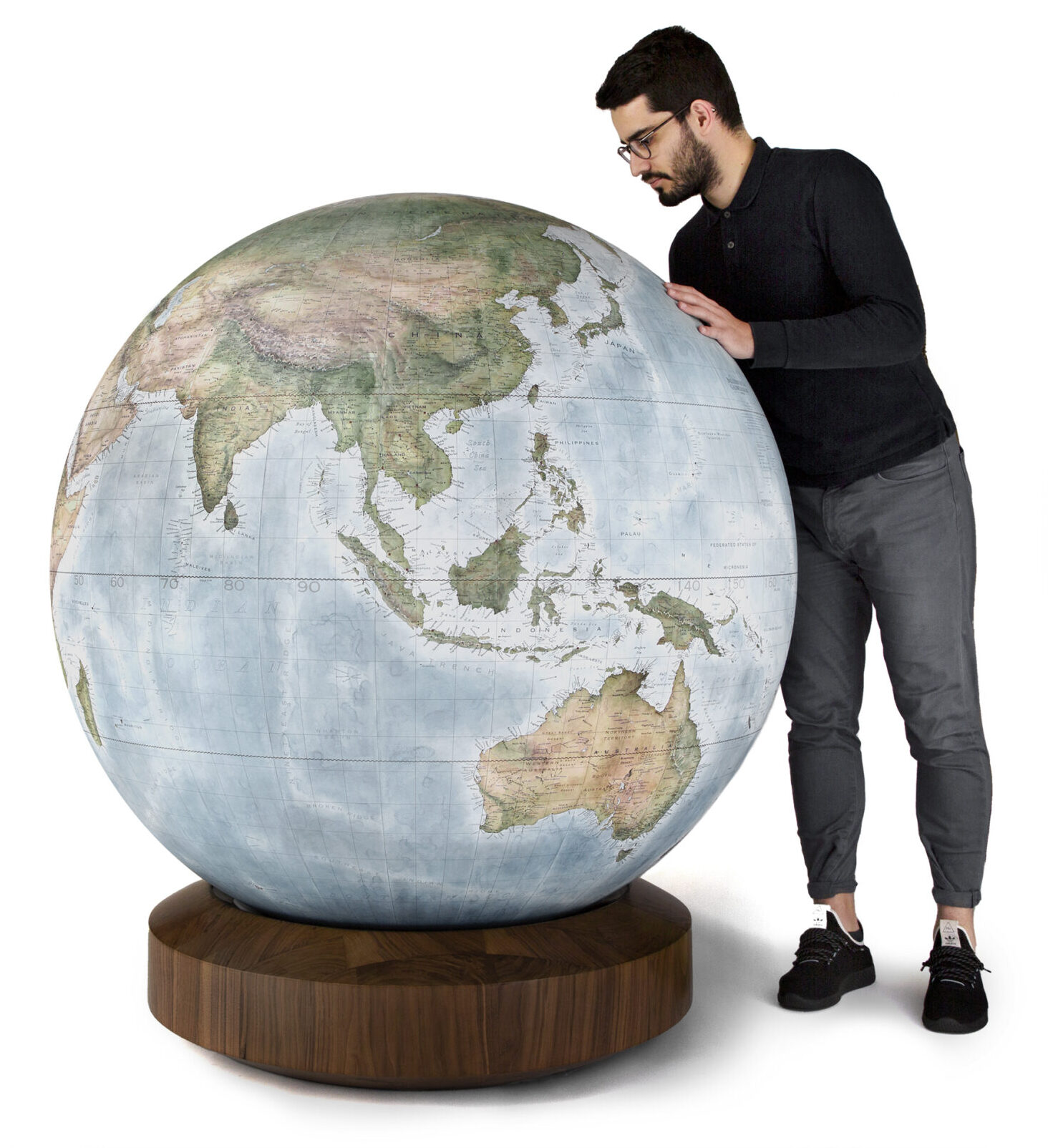
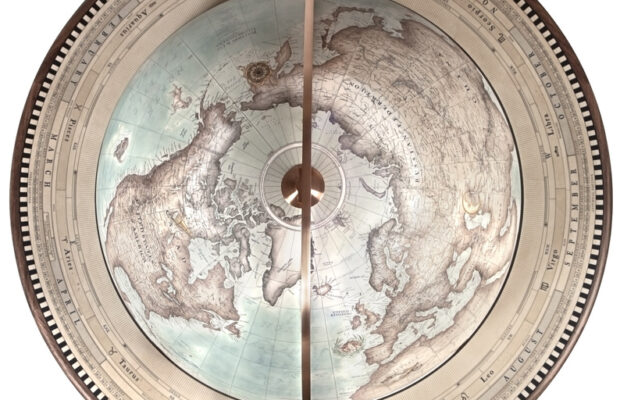
We are so lucky to have had our globes commissioned by heads of state and for palaces around the world. The ultimate symbolism of globes being used as diplomatic gifts is of course the huge 127cm (50 inch) diameter globes we often reference as our inspiration for our original rotational “Churchill Globes” – read down below for the full story. The exciting news we soon can announce involves an even larger 152cm (60 inch) diameter globe that we were commissioned to make – and it will sit not far away from where Franklin D. Roosevelt once gazed upon his own huge globe (no – not the White House!)
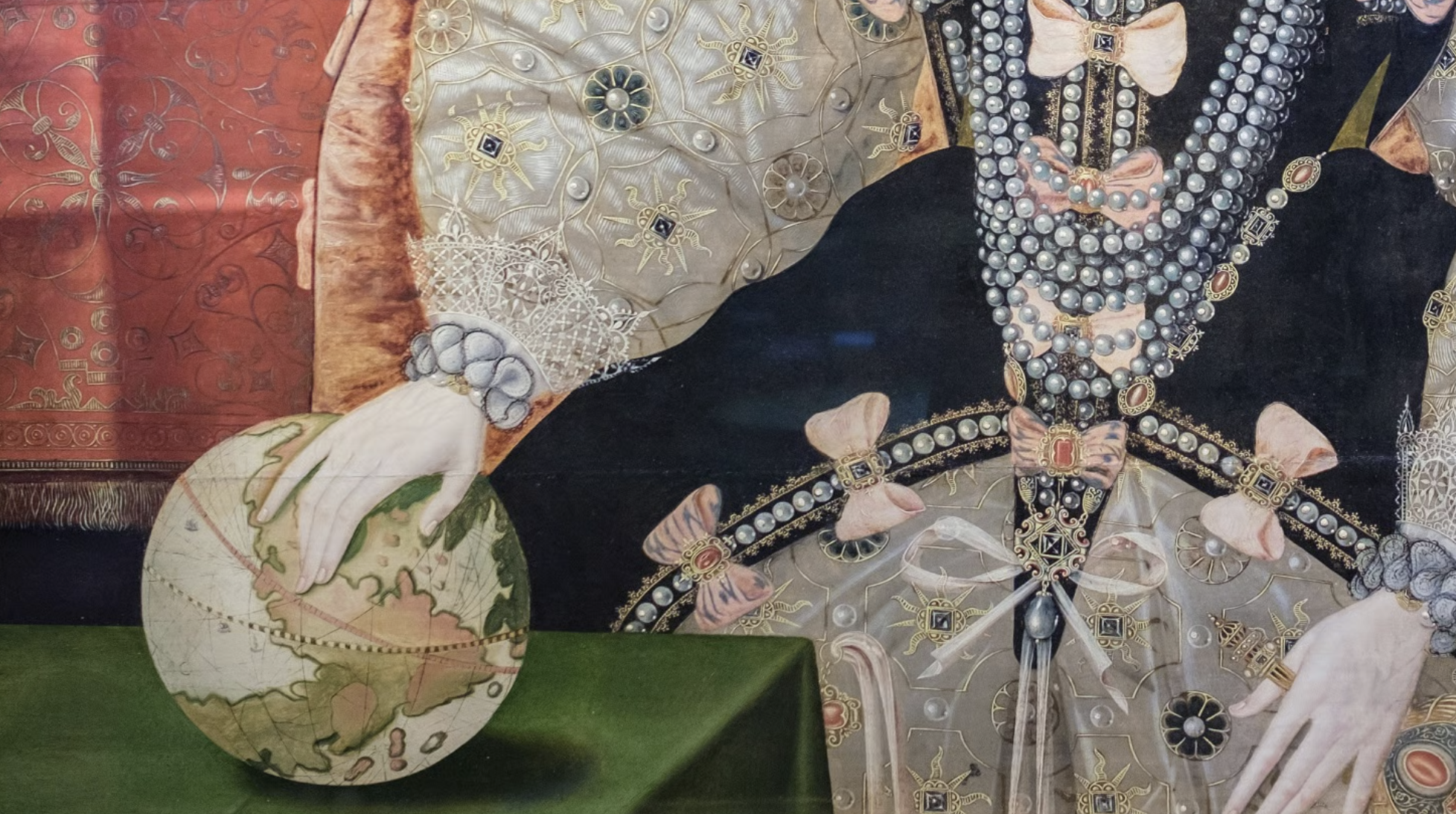
Power, knowledge, and alliance. Globes have always historically been more than maps; they represented, as in the case of the
Armada Portrait of Elizabeth I, a leader’s control over the world. A high quality world globe is still considered by some to be the ultimate luxury gift that merge advanced mathematics, art, and geographical knowledge.
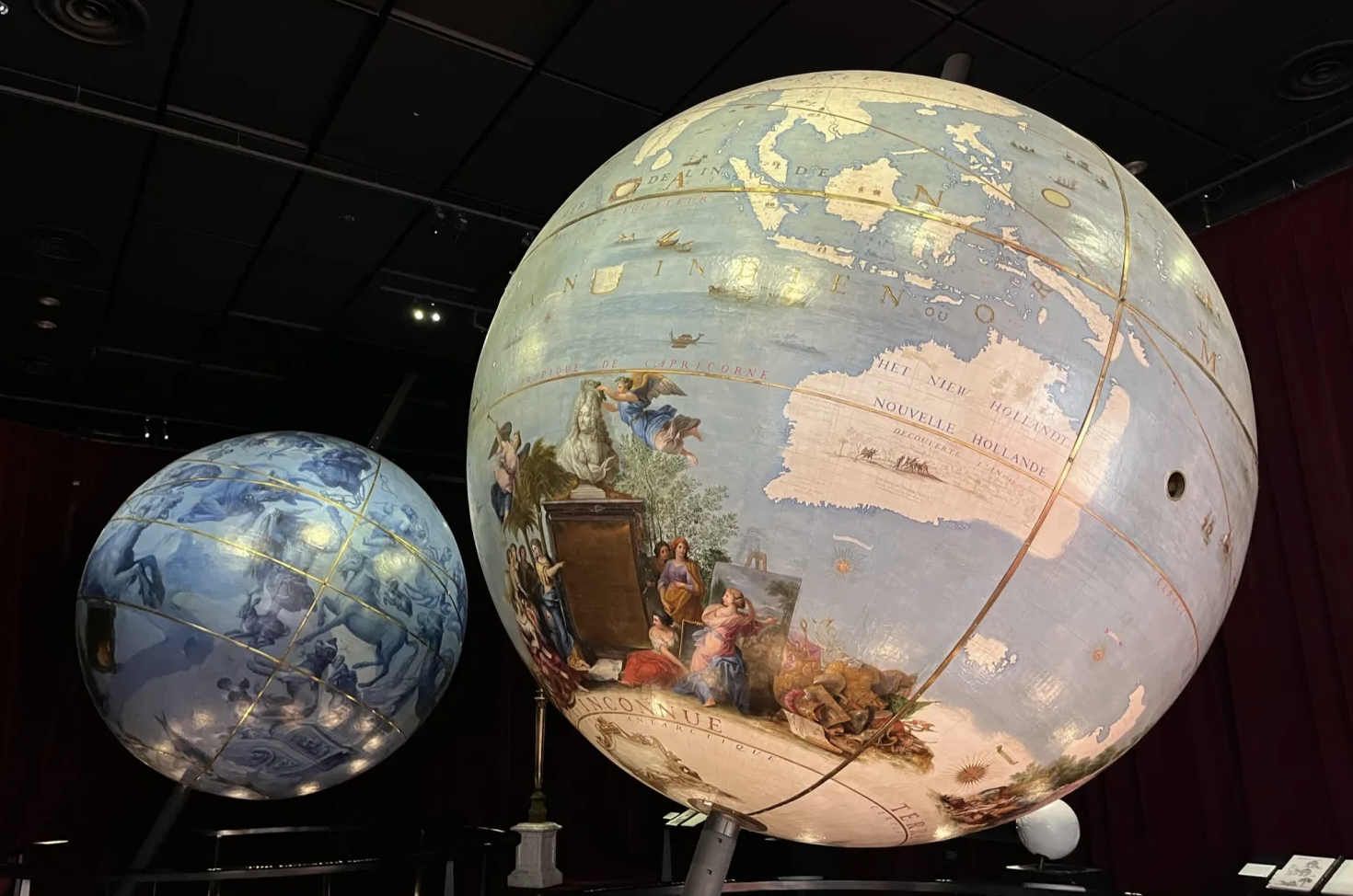
The 17th-century Coronelli Globes were gifted to Louis XIV in the 1680s, are a pair of monumental terrestrial and celestial spheres created by Venetian geographer Vincenzo Coronelli. They were built using wood frames, plaster, and cloth, featuring detailed hand-painted and engraved information. They were built using wood frames, plaster, and cloth, featuring detailed hand-painted and engraved information. Originally intended for Marly or Versailles, they were later moved and are now displayed at the
Bibliothèque nationale de France (BnF) in Paris.
You might notice that certain countries like New Zealand are missing or land is misrepresented – Australia is unfinished and California is an island. The terrestrial globe was the world mapped as it was known during the 17th century.
The globe highlights the different flora, fauna, animals, hunting as well as mining opportunities across the world in the 17th century through illustrations,
much like we are still commissioned to do today!
The globes served a manifestation of Louis XIV’s worldview and moreover the perspective France held of the world at the time – and celebrated and symbolised the French monarch’s dominion over “Heaven and Earth” and the glory of Versailles.
The Globus Jagellonicus (c. 1510) was likely commissioned to represent the rapidly evolving, conflicting geographical knowledge of the early 16th century, specifically reconciling traditional Ptolemaic views with new discoveries.
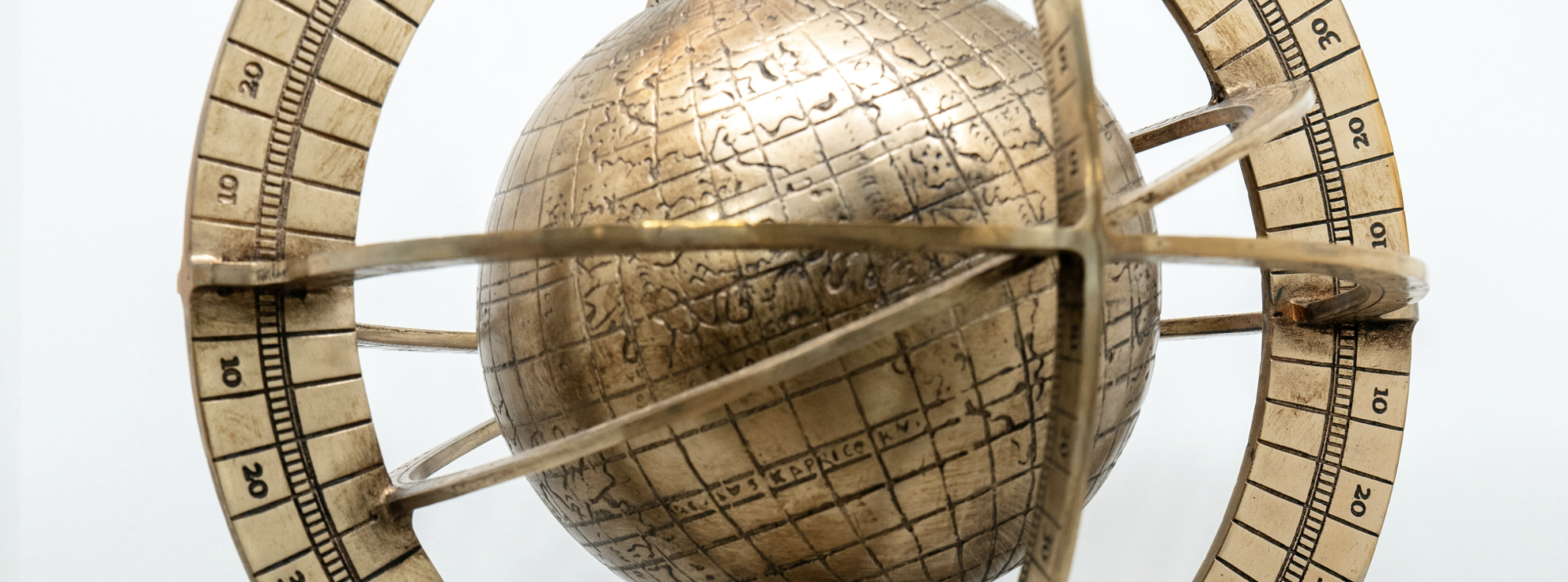
The Jagiellonian globe is a mechanical armillary sphere made in France, an astronomical instrument and a universal clock tracking both local solar time and sidereal time. The central brass sphere is engraved with a map of Earth and contains the clock mechanism.
The gilded copper globe is considered the earliest existing globe to indicate any part of the New World and the first to delineate the South American continent. It is also believed to be the oldest globe on which the continent of America is shown to be distinct from that of Asia. It uses the name “America” as part of a Latin phrase AMERICA NOVITER REPERTA. It uses the name “America”, which had been introduced in 1507 by Martin Waldseemüller in his Universalis Cosmographia, though for a continent located to the south of India.
A replica of the globe is on display in the Polish Nationality Room at the University of Pittsburgh – and the original can be found at the Collegium Maius Museum in Krakow, Poland.
In 2020, the President of the French Republic received a gift from the Republic of Poland: a representation of the “Jagellon” globe. This replica was inspired by the famous Globus Jagellonicus – a diplomatic gift (
read more).
Gerardus Mercator created influential terrestrial (1541) and celestial (1551) globes in Flanders, featuring advanced cartographic details like sea monsters and detailed coastlines. These historic, well-preserved globes (found at the
University of Lausanne and
Harry Ransom Center) preceded his famous 1569 cylindrical map projection. The Mercator Globe was crafted for Nicolas Perrenot de Granvelle, an advisor to Emperor Charles V, which served as a symbol of scientific and imperial control over the world. The other 1541 Mercator globe is in the U.S. at the
Harvard Map Collection –
Examine and twirl virtually here.
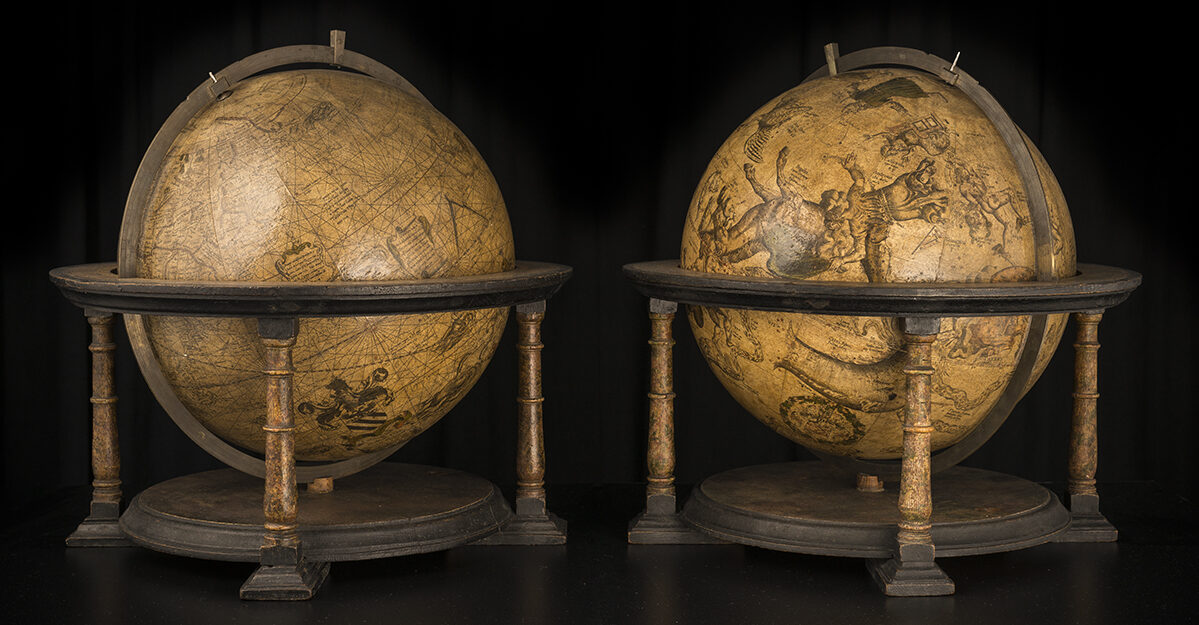
Mercator was a pathfinder who devised a way to make globes commercially by (relative) mass production. He abandoned the earlier practice of engraving a map directly on a solid sphere of wood or metal. Each Mercator globe is hollow, made of papier-mâché molded around a wooden sphere, cut from the form along the equator, reassembled, and coated with thin layers of plaster. He then covered the globe with 12 engraved paper gores that narrowed toward the poles and two calottes (circular caps) covering the poles. He colored the engravings by hand and set the globe into an innovative stand with horizon rings.
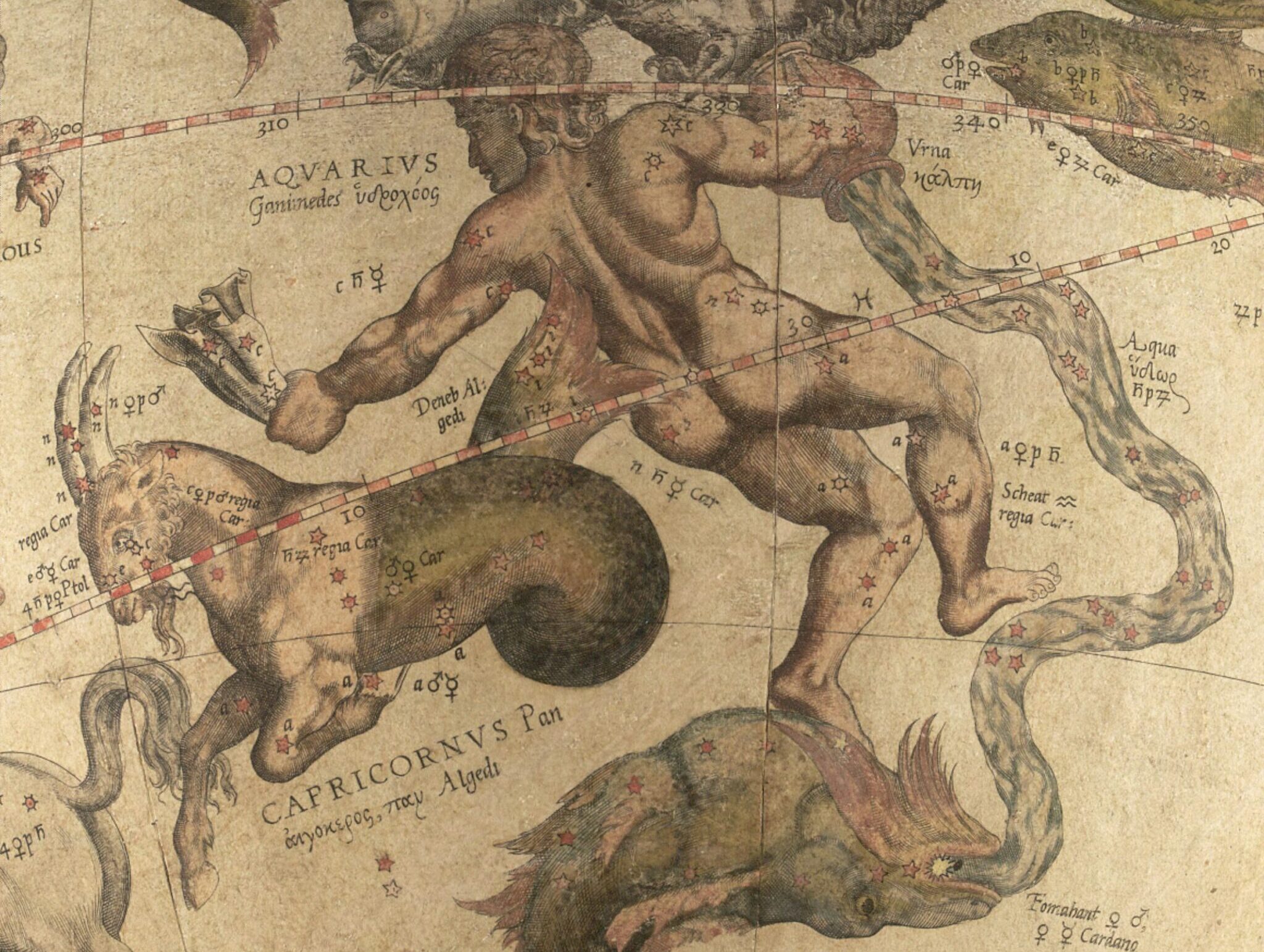
Mercator’s terrestrial globe was up to date and showed North America as a separate continent. His celestial globe was based on Ptolemy’s star system but also recognised recent findings by Copernicus. The globe shows the celestial sphere from the outside. Mortal stargazers imagined the figures in Mercator’s 50 constellations facing inward, which is why Sagittarius, at top, is shown from the rear. Scorpius appears to the right of the archer from our inside perspective, but here is at left.
Mercator issued only these two globes, and although he is thought to have made several hundred of them, only 22 matched pairs are known.
The cartographer went on to discover how to translate the round earth onto a flat map. This so-called Mercator projection, produced in 1569, let navigators plot a straight course over long distances far more easily than theretofore (
more in Harvard Magazine here).
Mercator globes were an important diplomatic gift used during the 16th century and beyond – globes continue to be powerful symbols of knowledge – showing your knowledge and showing off new discoveries – and one might say to some leaders it can give a feel and representation of “possession” of the world.
Columbus globes have been produced by the German Oestergaard family since 1909. They have historically been gifted to political leaders as symbols of power, global perspective, and, at times, strategic propaganda. Notable examples include custom, large-scale globes produced in the 1930s for the
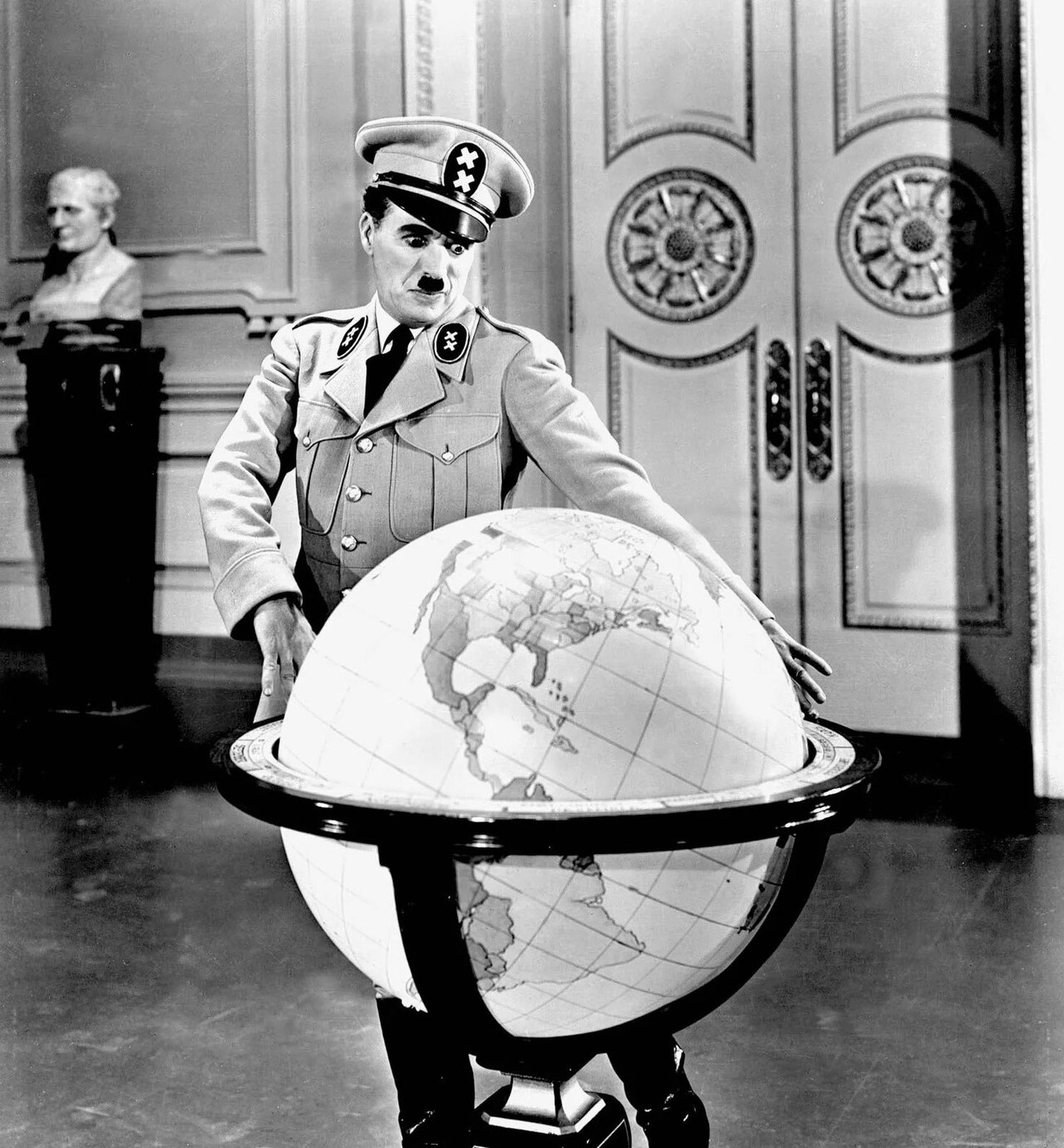
Nazi regime and those used by Allied leaders, such as the Weber Costello globes used by FDR, Churchill, and Marshall during World War II.
In the 1930s, Columbus manufactured large, bespoke globes for the Nazi Party, including a specialised version for Adolf Hitler that was nearly the size of a Volkswagen Beetle. This specific “Hitler globe” was notoriously modified to reflect the annexation of Abyssinia. It became widely known in the United States after comedian Charlie Chaplin parodied it in his 1940 film The Great Dictator. The Three Stooges also made fun of it in two of their short subject comedies. One of the two limited editions was looted by John Barsamian, a private in the U.S. Army, at Hitler’s summer retreat shortly after the war and sold 60 years later at an auction in San Francisco for $100,000.
As mentioned above, one story you have heard us tell many times if you follow our blog or social media or have read
our book – would be the inspiration behind
our Churchill Globe.
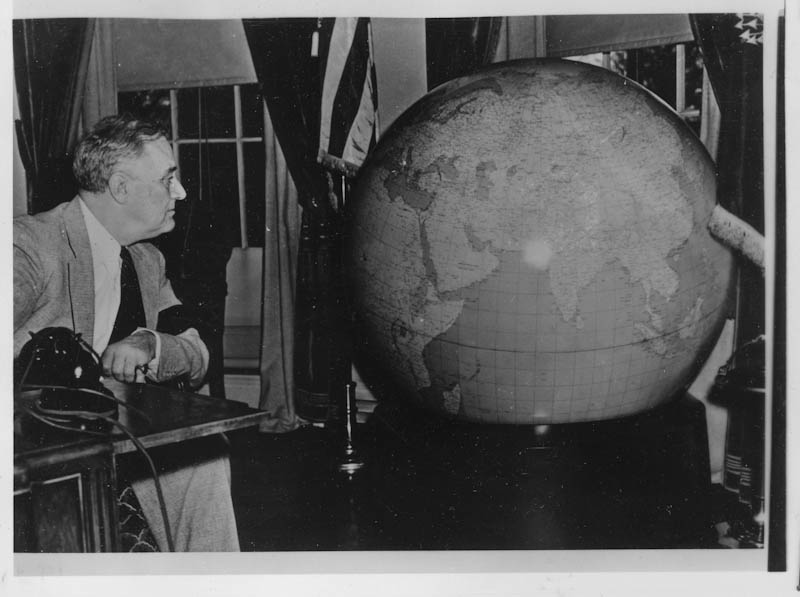
During World War II, elite US and British leaders (including FDR and Churchill) were presented with high quality and detailed globes for strategic planning. These served as significant tools for visualising the global nature of the conflict.
Weighing in at a whopping 750 pounds and sized at an impressive 127cm (50 inch) diameter, the globe was specially designed for President Franklin D. Roosevelt for use during World War II. The massive representation of the earth helped the president gauge distances over water to allocate personnel and material in support of the war effort against the Axis Powers of Germany, Japan, and Italy. This feat of cartographic history was given as a Christmas present to the president in 1942, and he placed the globe directly behind his office chair, often referring to it during his workday.
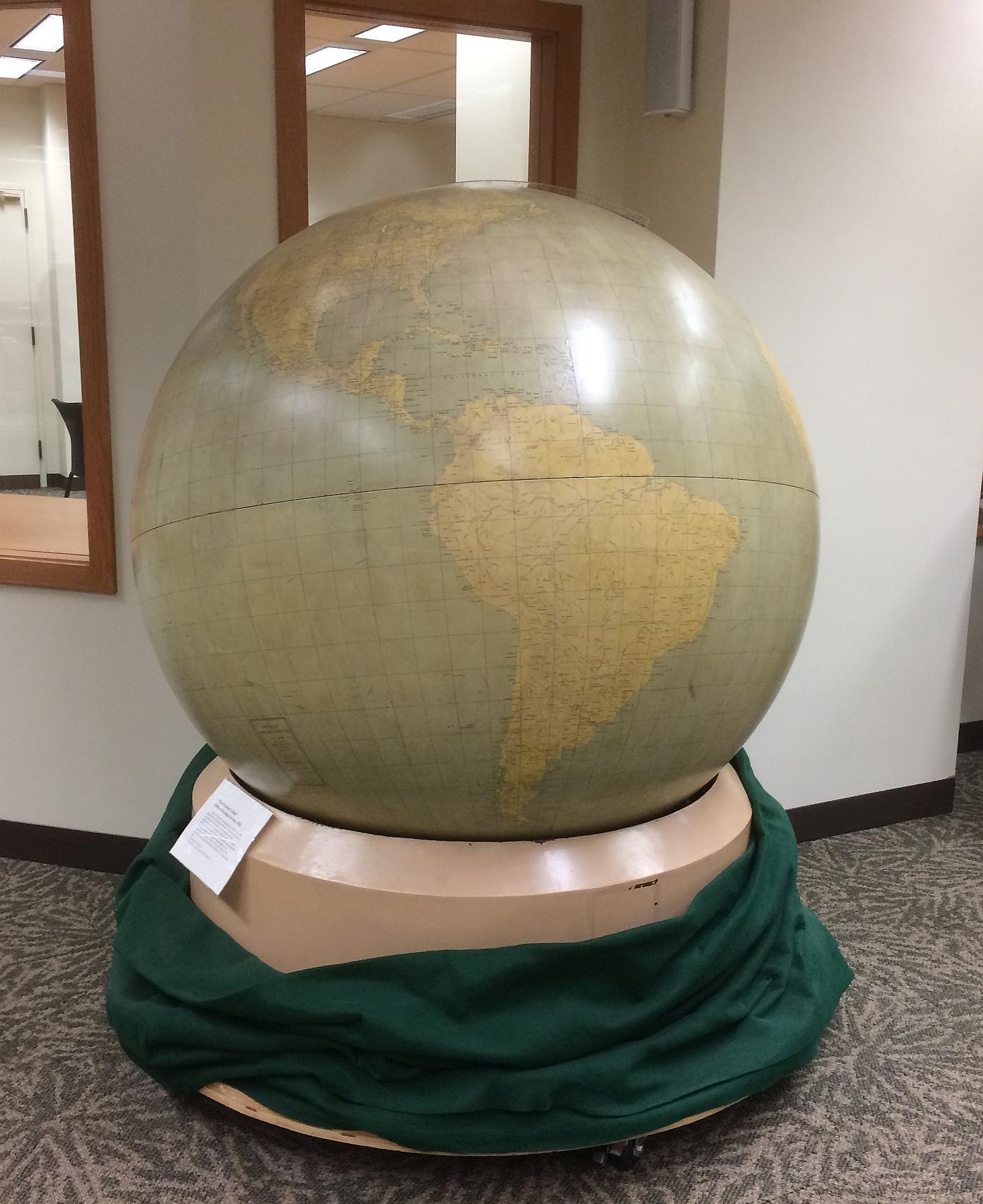
A matching globe was created for British Prime Minister Winston Churchill and a third for General George C. Marshall, the Chief of Staff of the United States Army. Each man used his globe as a reference point when communicating with the others about the war.
The President’s Globe was one such specially tailored OSS product said to offer the leaders “a view rather like that of an astronaut today. That certainly would have helped them contemplate the immense strategic and logistical problems of a truly global conflict.
The physical production of the globes was outsourced to Weber Costello Co., a company based in Chicago Heights, Illinois. The globes were constructed from two interlocking wooden sections.
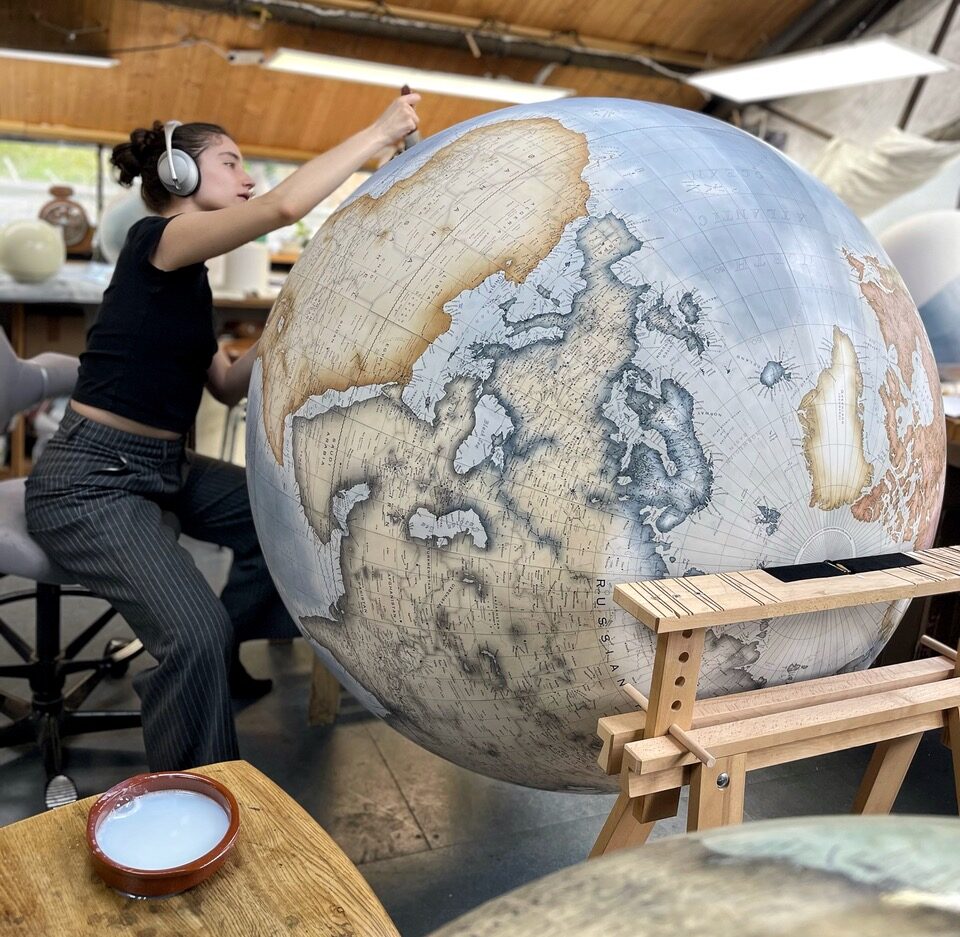
Pasting the massive gores onto the huge globe was considered a great feat of craftsmanship back then and still today, we can attest to that!
The weight and size of the globe required that a special base be manufactured to hold and rotate it – much the same as we do today though i must say ours are much smoother a spin!
The three duplicate globes owned by Roosevelt, Churchill, and Marshall were not the extent of the production run. Robinson placed the total number of globes between 12 and 15 but stated that the known records of Weber Costello Co. records are seemingly incomplete, which precludes a more definitive statement on the count.
Nonetheless, one globe that previously resided in the House of Representatives is on display in the Geography and Map Division Reading Room of the Library of Congress. Today, visitors to the division are welcome to see the globe (
reference Library of Congress).
As you can see – globes have long been favoured by leadership as a means to “possess the world” symbolically. Their inclusion in offices and meeting rooms represents a high-level overview of geography, trade, and strategic territory.
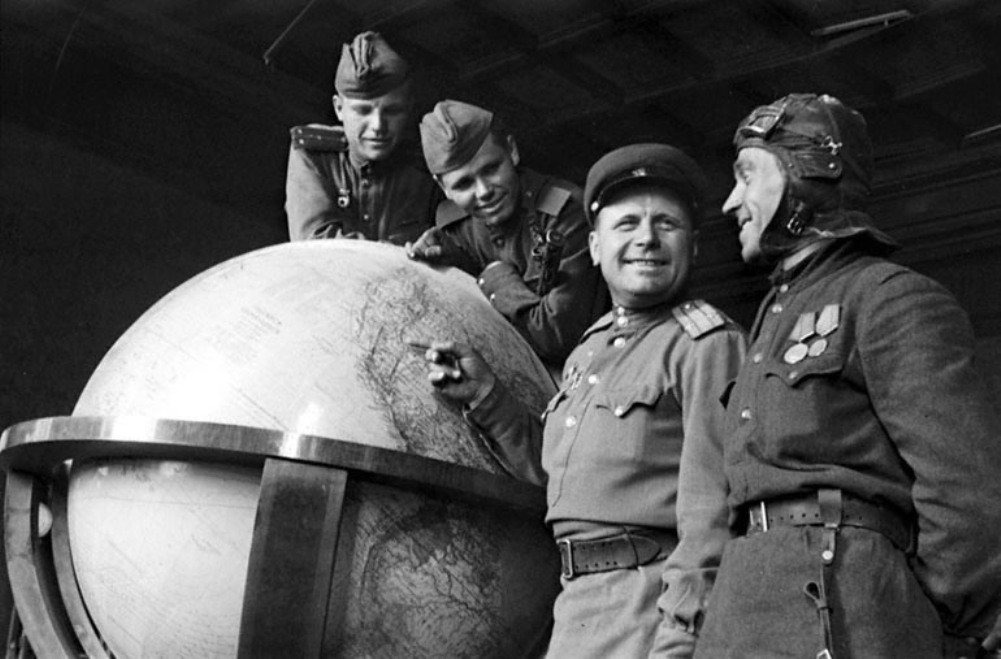
Soviet military in Hitler’s office with a large globe Berlin Germany 1945