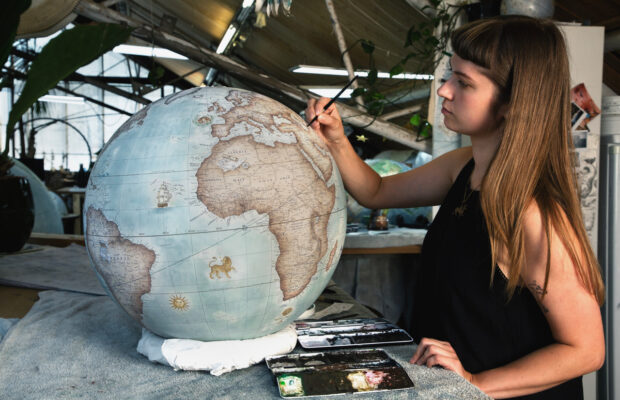
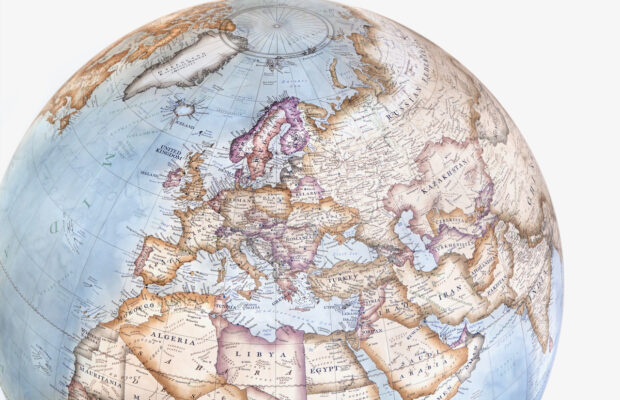
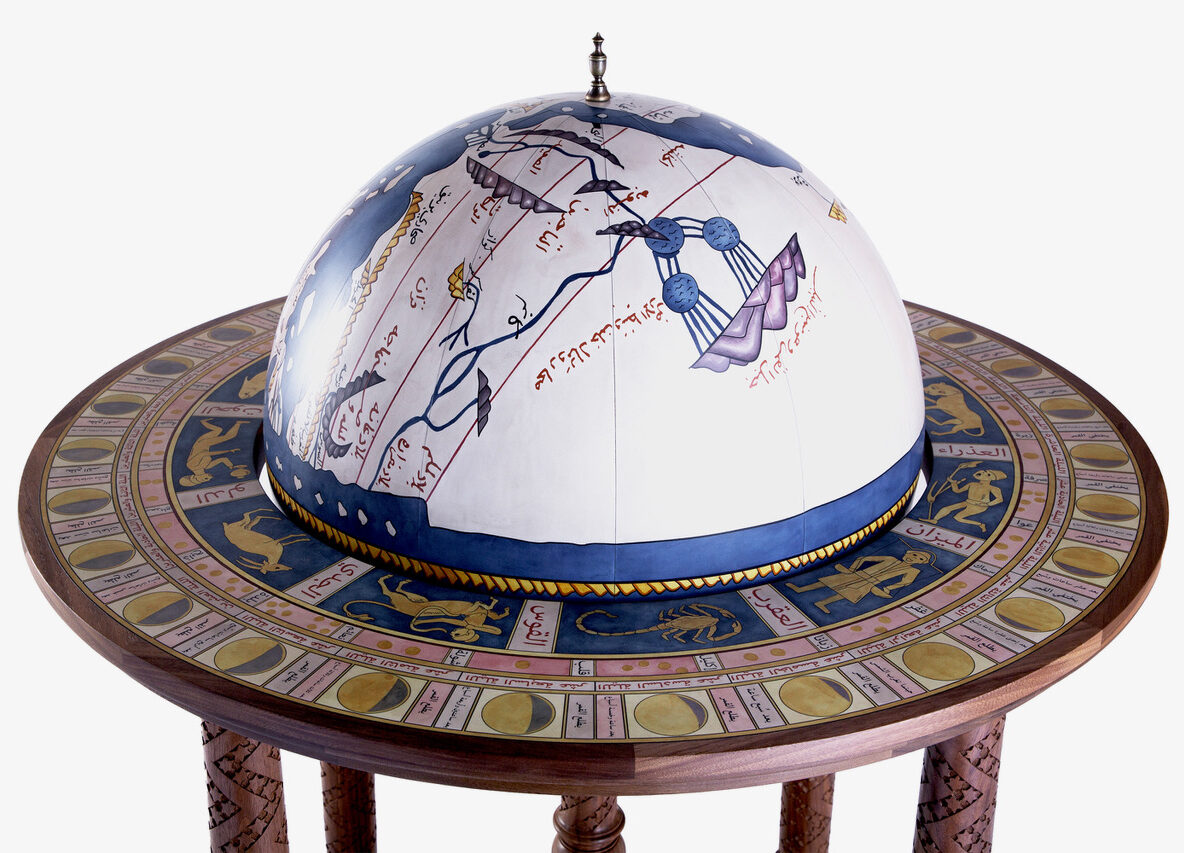
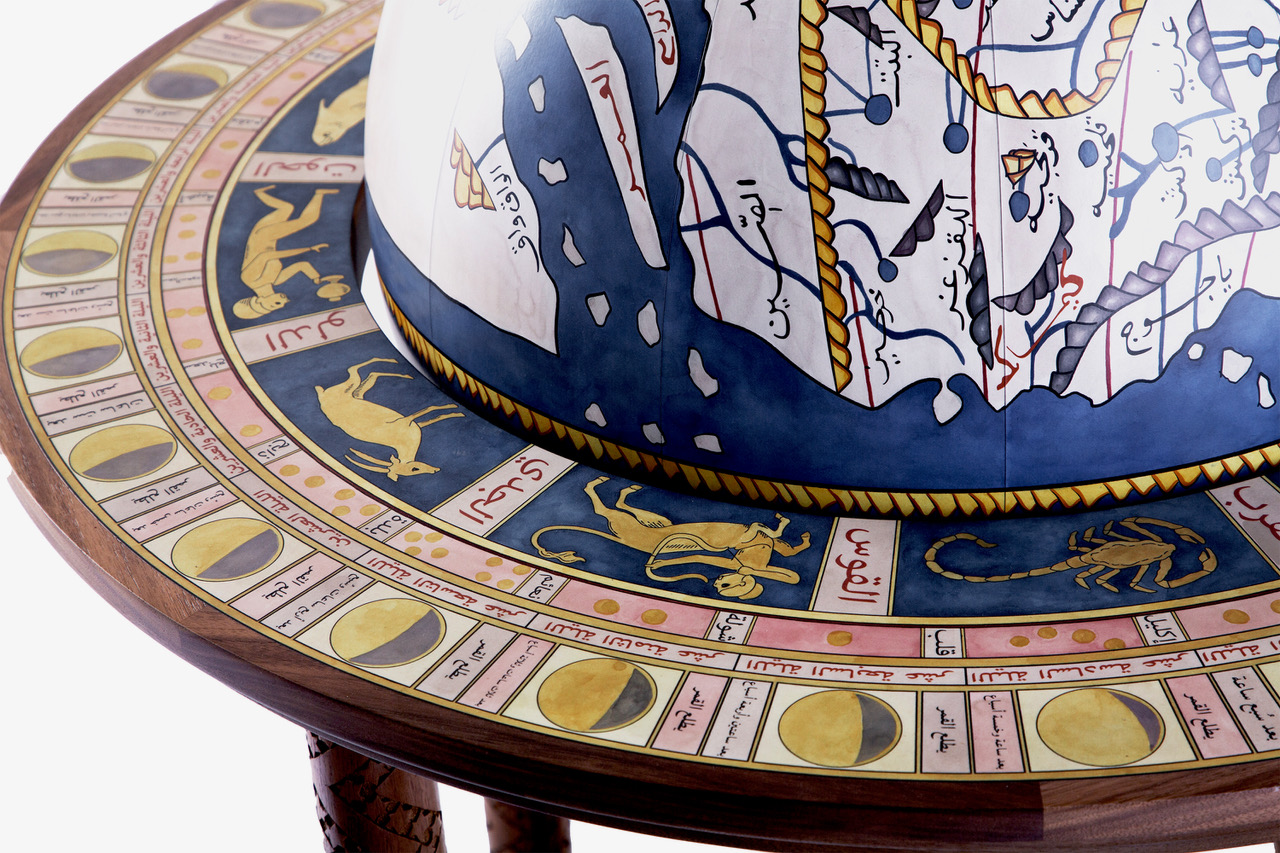
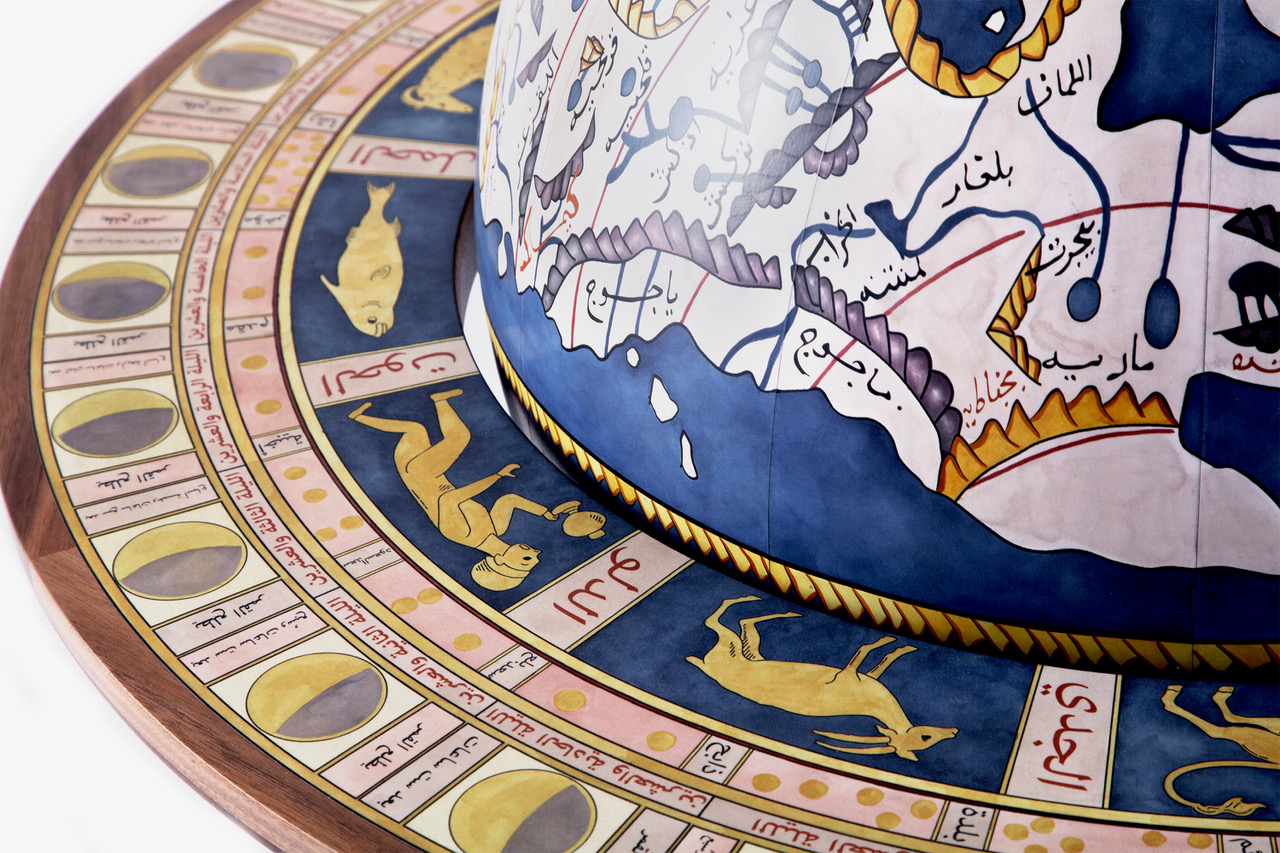
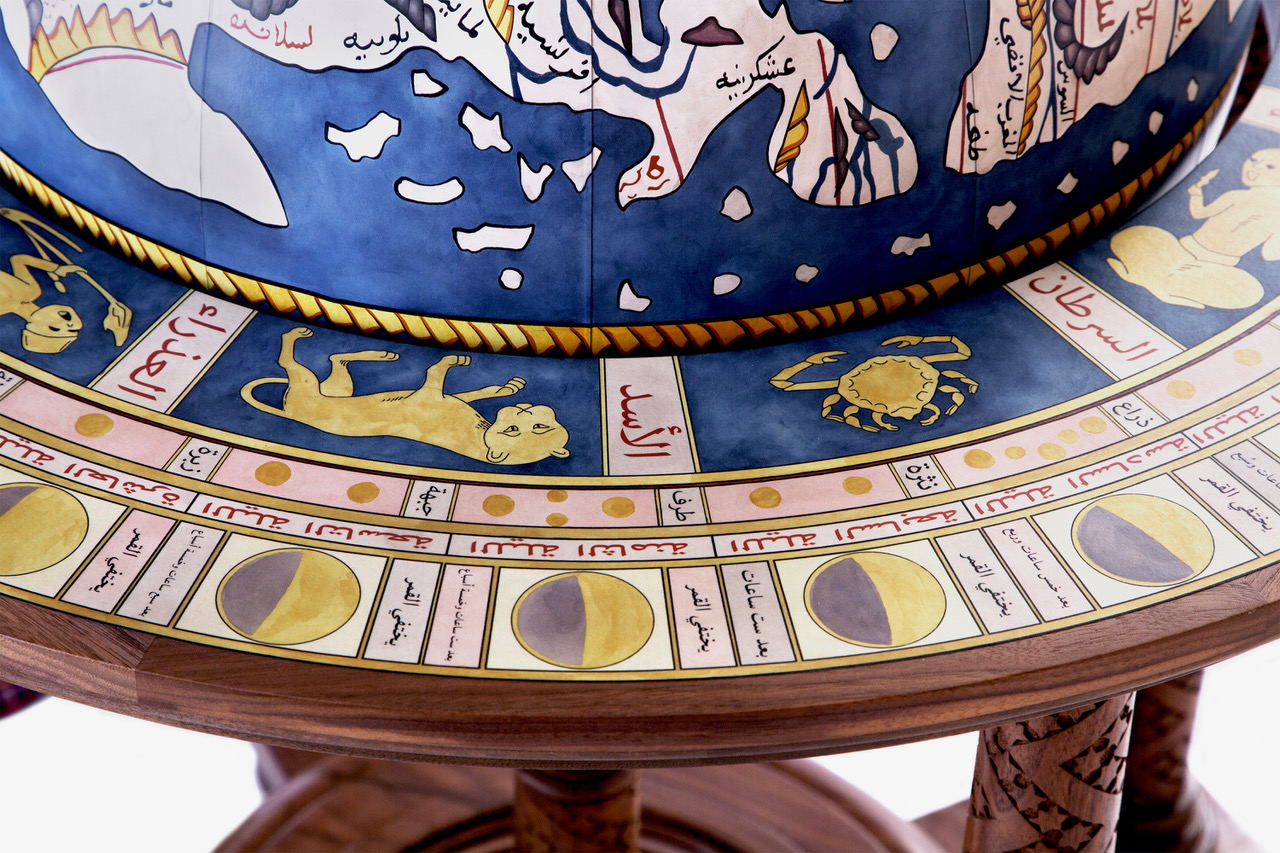
A special commission of Al-Idrisi’s world map from ‘Alî ibn Hasan al-Hûfî al-Qâsimî’s 1456. According to the Bibliothèque nationale de France, Ten copies of the Kitab Rujar or Tabula Rogeriana exist today. Of these, six contain at the start of the work a circular map of the world which is not mentioned in the text of al-Idris. Note that south is at the top of the map.
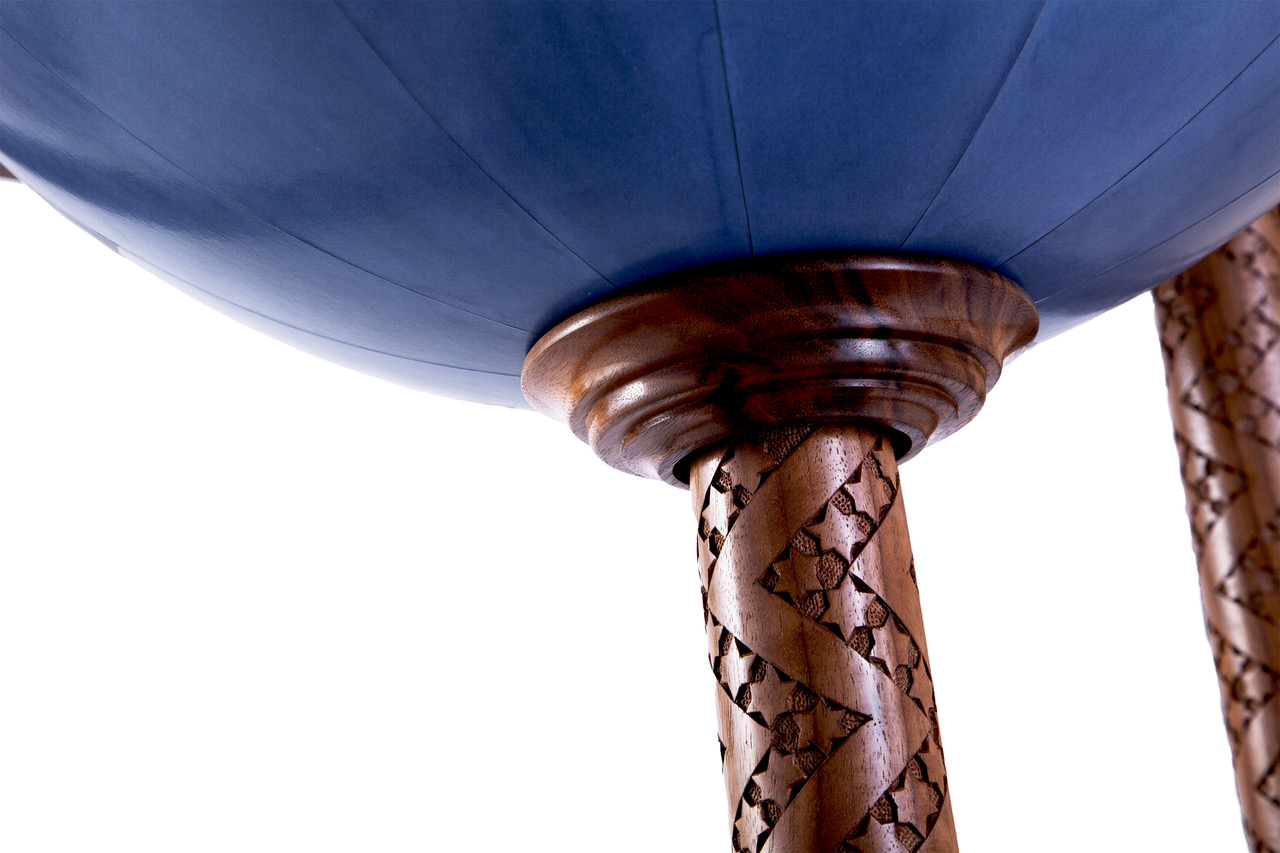
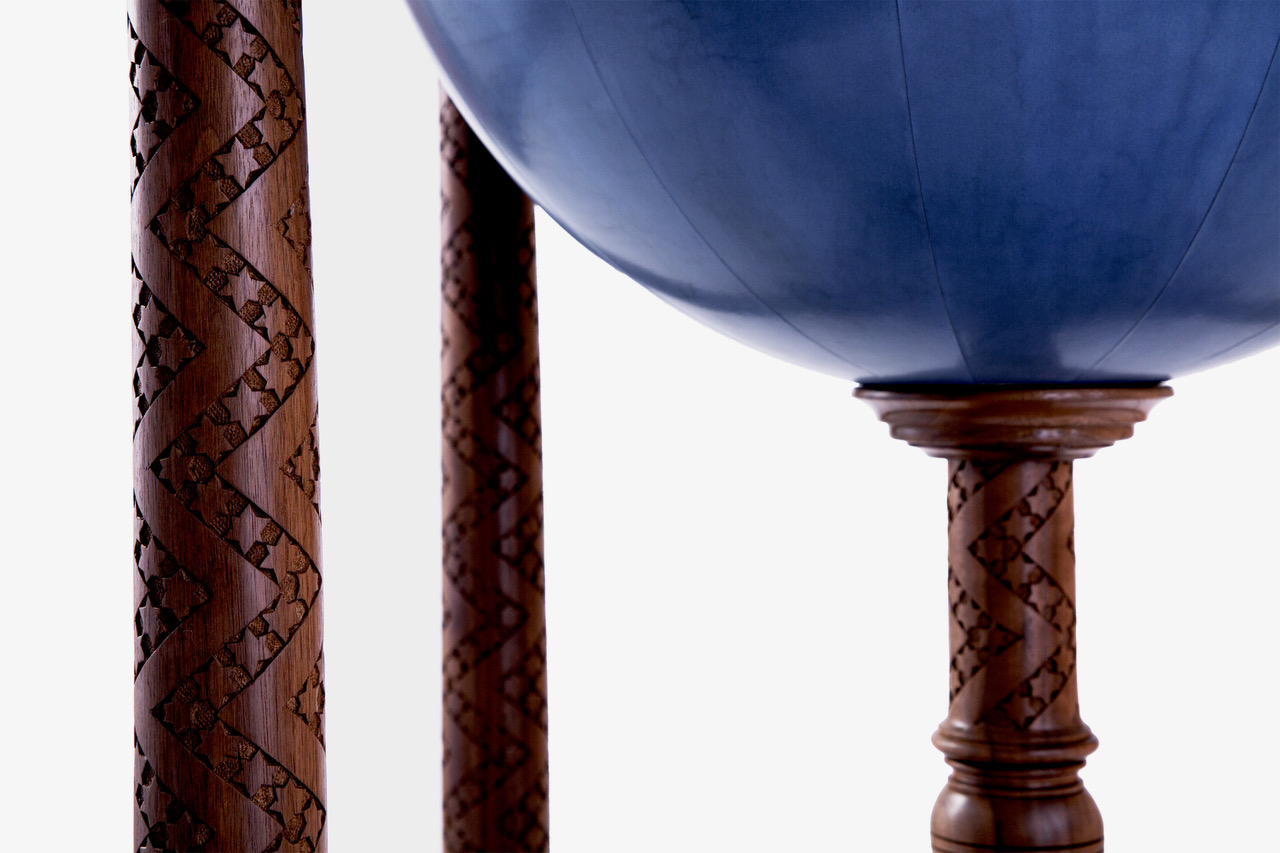
This client requested that the globe not tilt or be in a meridian but just spin through the middle section, and requested the bottom section of the globe remain blank / hand painted the deep blue as shown.
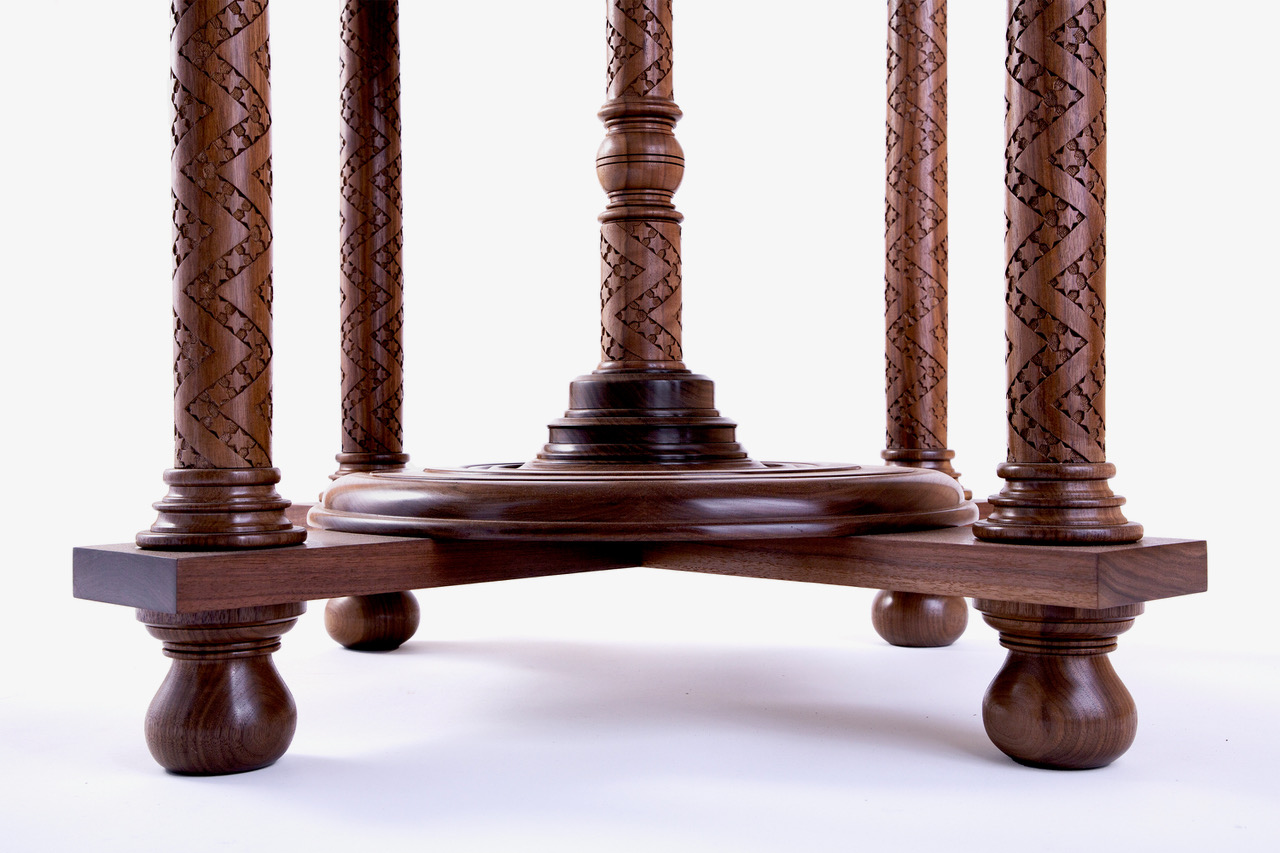
For the base the client requested a hand engraved motif inspired by mosaics.
Back to the map. Centuries before digital navigation apps put global maps at our fingertips, people relied on the work and research of scholars and cartographers (mapmakers) to illustrate the world. One of the most famous cartographers to publish early maps of the world was Arab Muslim geographer, traveler, and scholar Abū Abdallāh Muhammad ibn Muhammad ibn Abdallāh ibn Idrīs al-sharif al-Idrīsī, or simply al-Idrisi. AlIdrisi’s book, The Excursion of One Who is Eager to Traverse the Regions of the World, is known as one of the great works of medieval geography and cartography.
Little is known about al-Idrisi’s life. It is likely he was born in Sabtah, Morocco (now known as Ceuta), around 1100 C.E. Al-Idrisi is believed to be a descendant of the Islamic Prophet Muhammad. He attended the university in Cordoba, Spain, and traveled throughout North Africa, Europe’s Mediterranean region, and Spain.
In 1145 C.E., al-Idrisi became an advisor to King Roger II of Sicily. Roger II hired al-Idrisi to create an updated world map. Al-Idrisi sent travelers and geographers around the world to gather knowledge for this updated map and others.
The fruit of these efforts, The Excursion of One Who is Eager to Traverse the Regions of the World, was completed in 1154 C.E., shortly before the king’s death. The finished product included a text illustrating the geographic findings and a collection of 70 maps that included the world north of the equator. Al-Idrisi’s work was translated into Latin and studied globally.









Facts via National Geographic.
Bellerby & Co Globemakers, London