We are in the current House & Garden – click to read online.

How difficult can it be to make a sphere and put a map on it, I reasoned? It never really crossed my mind why there might not be other globemakers doing everything by hand and that the process might be difficult.
I began my research online. On YouTube there were some hilarious videos of people trying to make spheres, some passionate and rich (but time-poor) banking executives documenting all their work diligently and failing. I visited an enormous prop house in west London that had every piece of furniture imaginable, but no globes of note. It transpired that in the last 60 or so years, makers had stopped constructing globes properly; they’d been cutting corners (quite literally) and had turned the profession into a part-time do-it-yourself craft, lacking artistic refinement and technique.
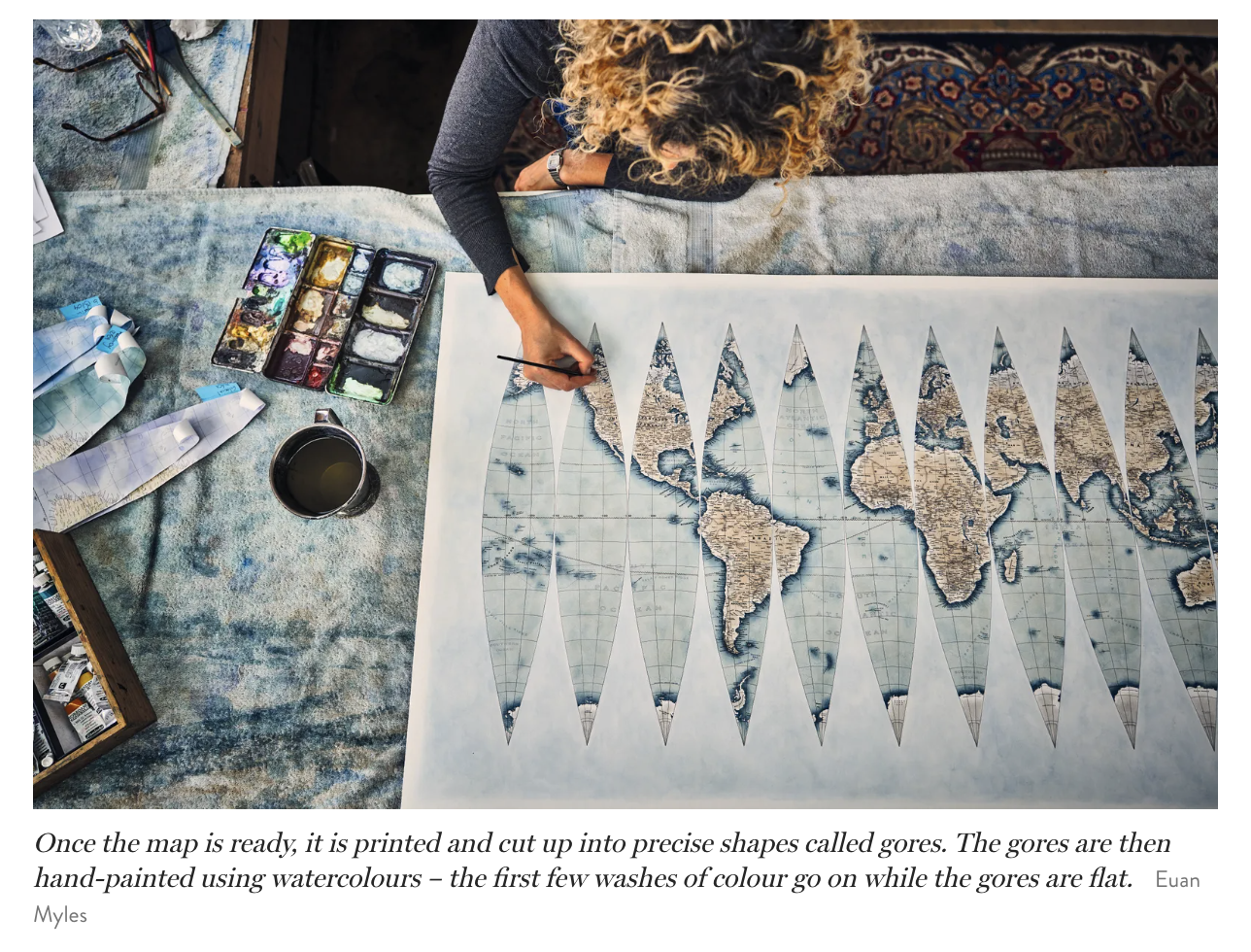
But I was nevertheless confident that I could make something not dissimilar to the globes produced by historical artisans – notably, Blaeu and Coronelli, two of the most important makers technically and aesthetically, who had made globes so beautifully in the 17th century.
While it’s inaccurate to say these makers took their construction secrets to their respective graves, I told myself that making a globe couldn’t be complicated: a simple mix of basic maths (mainly pi), art and craftsmanship, all of which I felt I could master. I was confident I could work it all out and set about making a list of priorities. There would, of course, be other little mysteries I would have to work out along the way. How, for instance, do you balance the sphere, so that when it spins it comes naturally to rest? And how do you support the globe within the meridian?

A year later, in summer 2010, my one-man operation had grown to the extent that I had hired a part-time painter and a woodworker, and it had evolved into my own company. I had completed a few globes, set up a website and as a result happily received a first order, from a librarian in Australia.
What had started as a modest plan to make a special birthday gift for my father led me to a whole other life as the founder of Bellerby & Co Globemakers, the only fully bespoke globemaker in the world. We do everything from start to watercolour finish by hand, and as a result I find myself more in awe of our planet than ever. Globes are a wonderful convergence of the arts and the sciences. The process of globemaking requires sound knowledge and skill in engineering, geographical knowledge, artistic ability in painting and, most importantly perhaps, an endless curiosity. The job of a globemaker is never complete: politically, the world changes continuously, and the act and art of globemaking is just as captivating as the countries, cities, mountains and oceans depicted on the globes themselves.
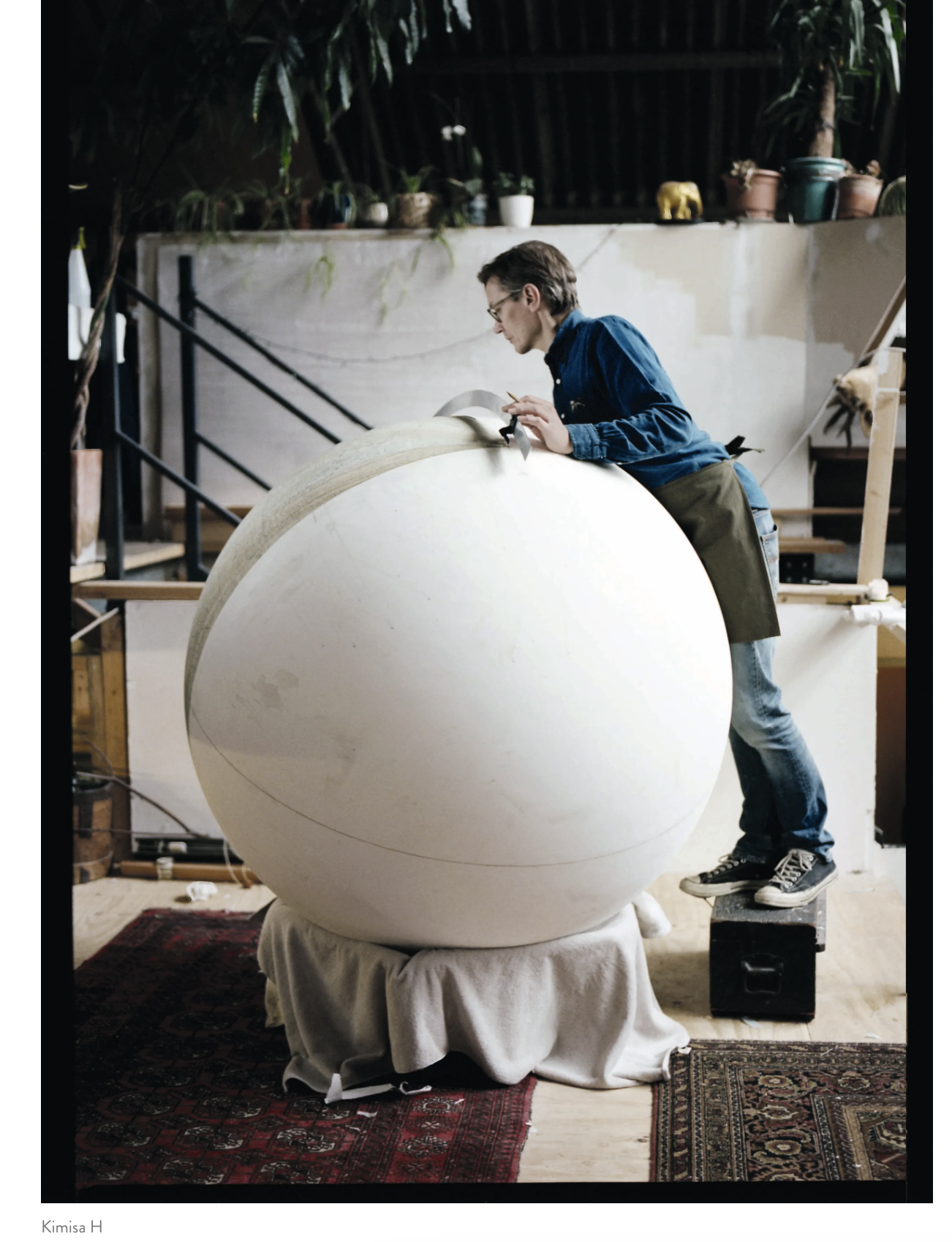
The process of creating the perfect sphere has come a long way from Peter’s early attempts. They are made of resin, plaster of Paris or glass-reinforced plastic and start as separate halves before being joined together and balanced.
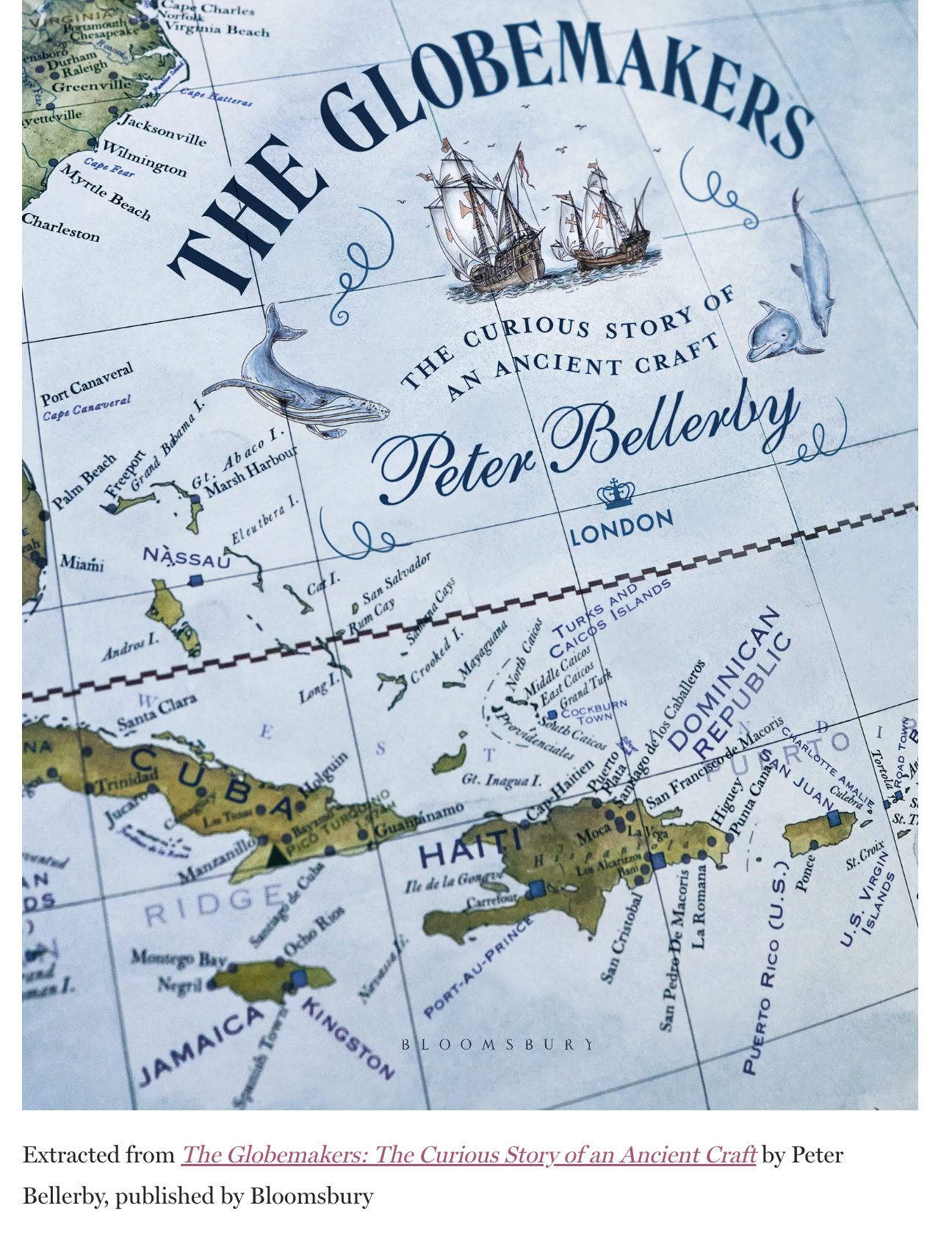
The process of creating the perfect sphere has come a long way from Peter’s early attempts. They are made of resin, plaster of Paris or glass-reinforced plastic and start as separate halves before being joined together and balanced
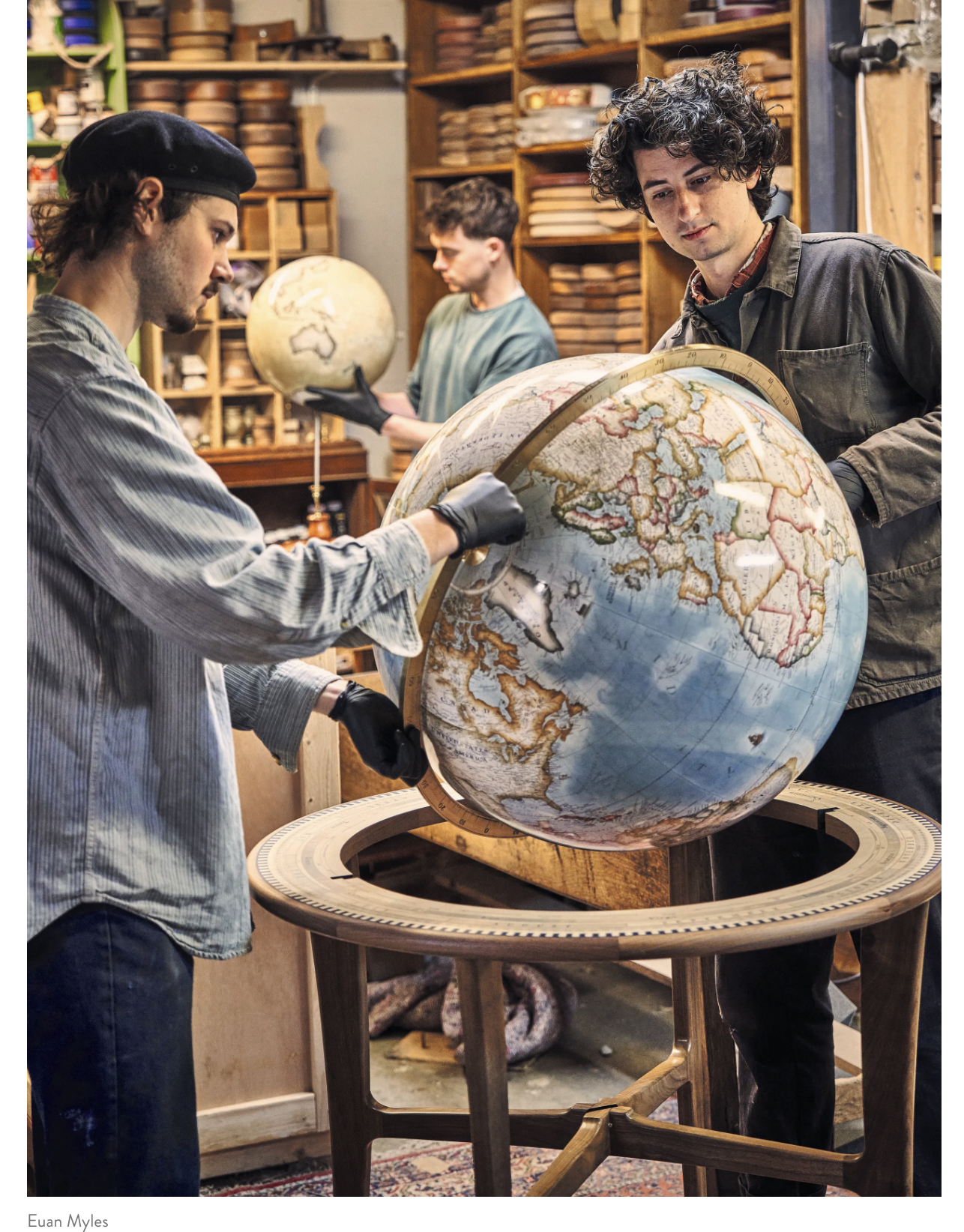
Once the globe is finished and sealed, it is placed into its base in the workshop. Bellerby & Co makes a variety of traditional and modern bases, which are fully hand-built and finished to each customer’s preference
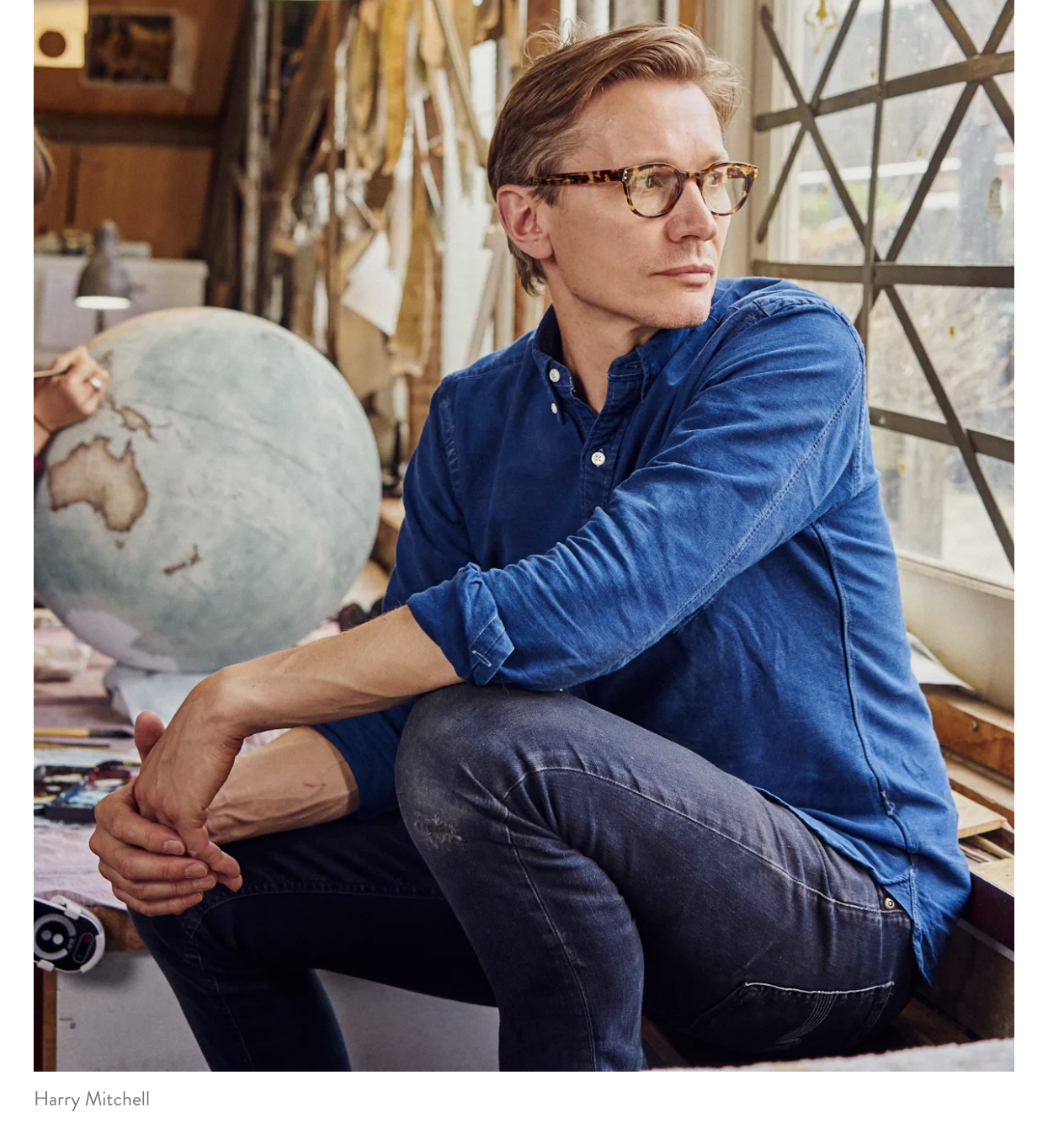
Founder Peter Bellerby
For more information please email : jade@bellerbyglobemakers.com