This article was in print and online here.
Article by Jaime Lázaro – Photographs by Guido Bollino and Euan Myles
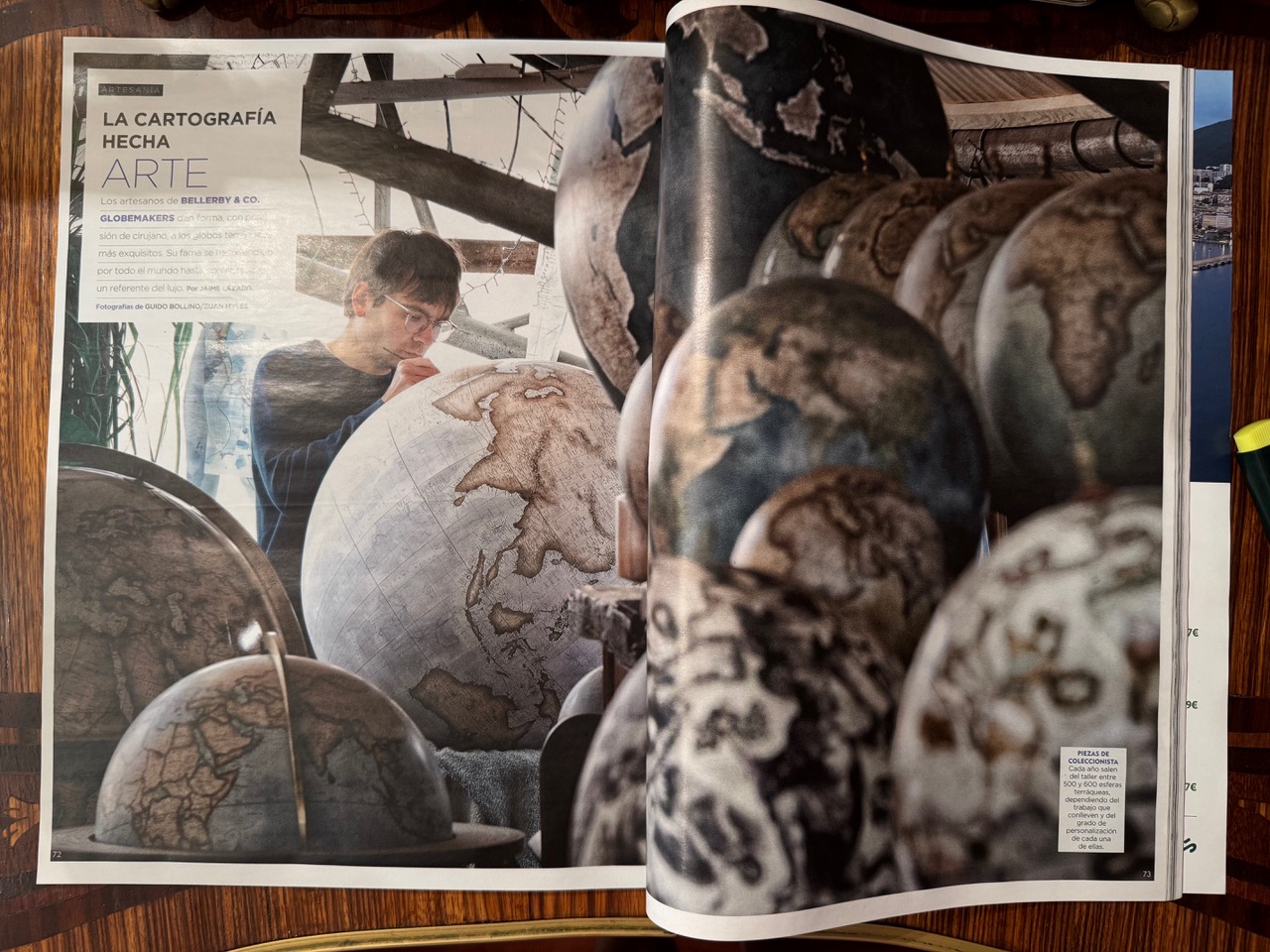

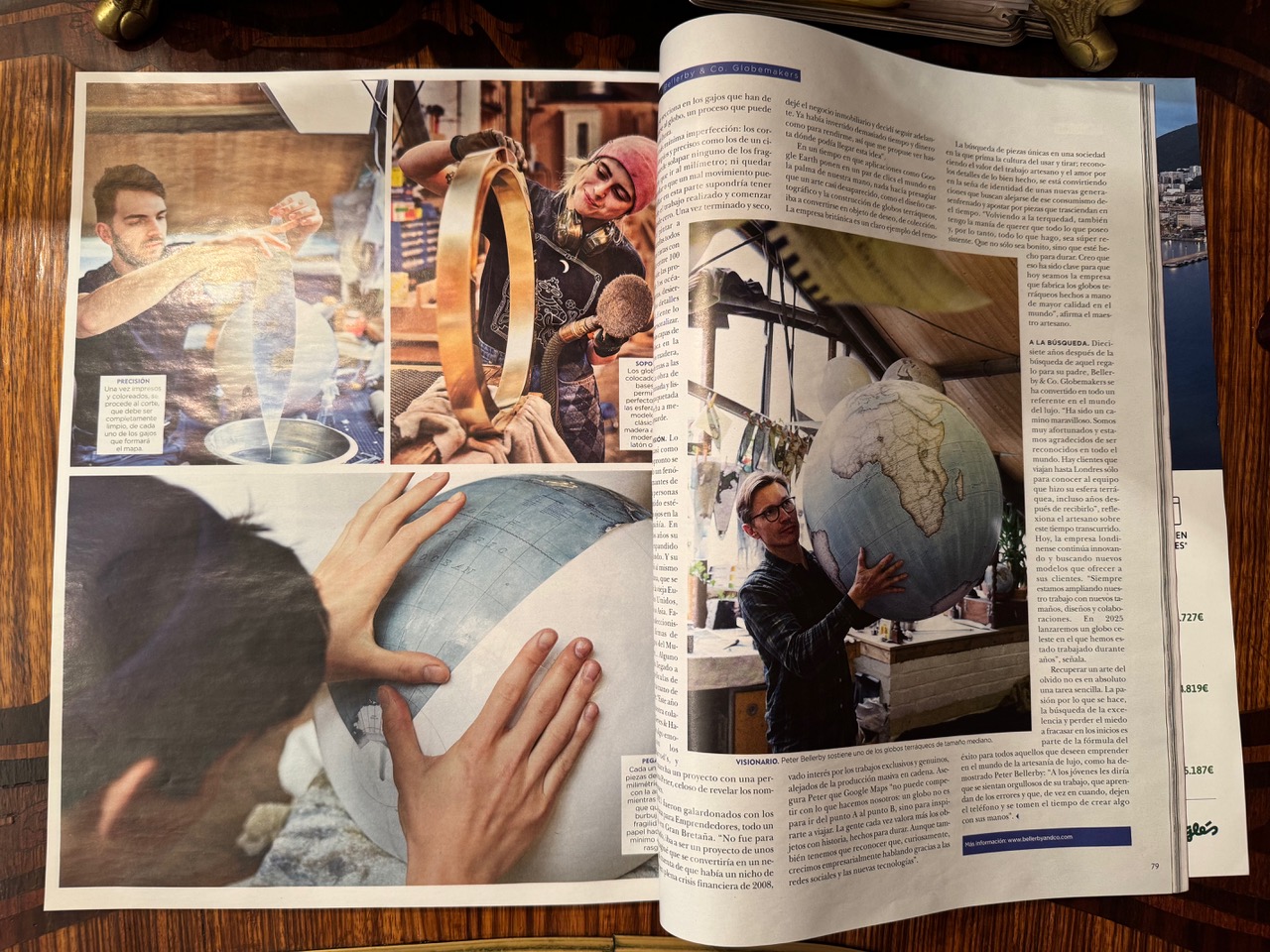


La luz se cuela desde el techo abuhardillado, reflejándose en las maderas claras de paredes y techos. Entre pequeñas casas de ladrillo con cubiertas de pizarra, en el distrito londinense de Stoke Newington, se esconde uno de los talleres artesanales más singulares y únicos del mundo. Lugar de peregrinación de muchos de los clientes de Bellerby & Co. Globemakers, la compañía fundada en 2008 por Peter Bellerby, quien no sólo ha recuperado este viejo y casi olvidado trabajo, sino que ha elevado esta labor artesanal a la categoría de arte. Las esferas se acumulan aquí y allá, dándole al espacio un aspecto casi onírico, daliniano, mientras un reducido ejército de expertos trabajadores da forma a cada uno de los procesos de creación. Sin duda, no es este un lugar apto para terraplanistas.
Quien más y quien menos ha tenido algún globo terráqueo de niño en su cuarto, ha imaginado viajes y destinos imposibles. Precisamente, esa es la intención de Peter Bellerby, que recuperemos esa tradición y volvamos a soñar con descubrimientos y tierras inexploradas mientras hacemos girar estos bellísimos mapas tridimensionales. Del taller de Bellerby & Co. salen al año entre 500 y 600 globos terráqueos de distintos tamaños. Desde el más pequeño, de 12 centímetros de diámetro y valorado en unos 1.300 euros, hasta el modelo Churchill, con sus imponentes 127 centímetros y un precio que roza los 80.000 euros. Y, para hacerse con algunas de estas fascinantes creaciones, hay que estar entre seis y nueve meses en una lista de espera. “El número de piezas que podemos llegar a realizar depende de los encargos que tengamos y de la complejidad de los proyectos; cada creación es única, y se hace por encargo. Muchos llevan complejas personalizaciones y algunos clientes nos piden bases talladas a mano con detalles muy elaborados. Para los que no quieren esperar tanto, cada mes hacemos algunos modelos pequeños en colores populares para entregar de forma rápida”, explica el fundador de la empresa.
Cada diseño de Bellerby & Co. es casi una pieza de museo. Una oda a la ciencia que exalta la estética y la belleza. ¿Cuánto tarda en fabricarse un globo? “No hay un tiempo exacto, cada uno de ellos es distinto. Depende del tamaño, los colores, la base y lo que el cliente quiera personalizar. “Algunos llevan semanas, otros meses o incluso años”, destaca Peter. Uno de los secretos del éxito de estos mapas esféricos es la posibilidad que tienen sus clientes de personalizarlos. Hasta el más mínimo detalle. Desde aquellos que quieren que se reflejen los orígenes y expansión de una familia, a los que prefieren que se represente la Ruta de la Seda, los animales típicos o cinegéticos de cada país, la esfera celeste con los signos del zodiaco, ilustraciones a medida o la luna con sus cráteres y mares incluidos. Cualquier cosa que el cliente quiera proponer y pueda plasmarse.

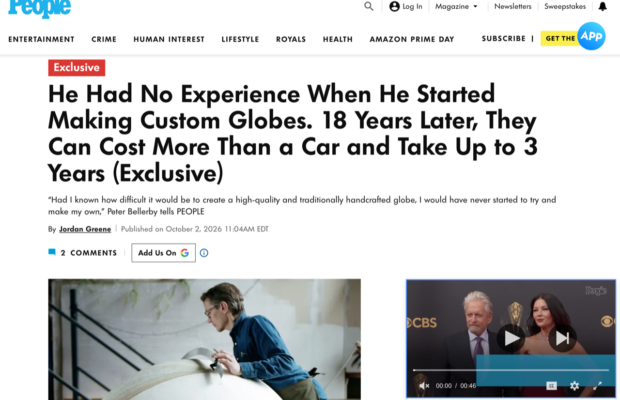
Todo empezó con un regalo. En el año 2008, Peter Bellerby, un conocido productor televisivo y agente inmobiliario, quiso sorprender a su padre por su 88 cumpleaños con algo especial: un globo terráqueo. Como lo que encontraba en el mercado no le gustaba o excedía su presupuesto, decidió fabricarlo él mismo. El proceso fue más complicado de lo que había previsto en un principio. “Siempre he sido muy terco”, reconoce, así que durante dos años experimentó una y otra vez con los más diversos materiales y técnicas. Se enfrentó a todo tipo de desafíos, como materiales que se rompían o dificultades con la cartografía, pero “no soy de los que se rinden fácilmente, cada día era un nuevo desafío”, asegura. Sólo el proceso de crear una esfera perfecta (tuvo que recurrir a un fabricante de Fórmula 1 para que le ayudara) le llevó a escribir un capítulo entero de su libro Los fabricantes de globos. “Superar obstáculos se volvió parte de mi día a día”, asegura.

Desde los humildes comienzos en su propia casa, la empresa ha ido creciendo para satisfacer la demanda, sin perder ni un ápice de calidad: “Dependiendo del día, en el estudio somos hasta 30 personas. En el equipo hay artesanos, pintores, carpinteros, metalistas, un grabador, un ilustrador y cartógrafos. Buscamos gente talentosa, con ojo para los detalles. Es clave saber frenar el ritmo, ser perfeccionista y tener muchísima paciencia”, explica su fundador, que siempre busca que su producción sea sostenible.
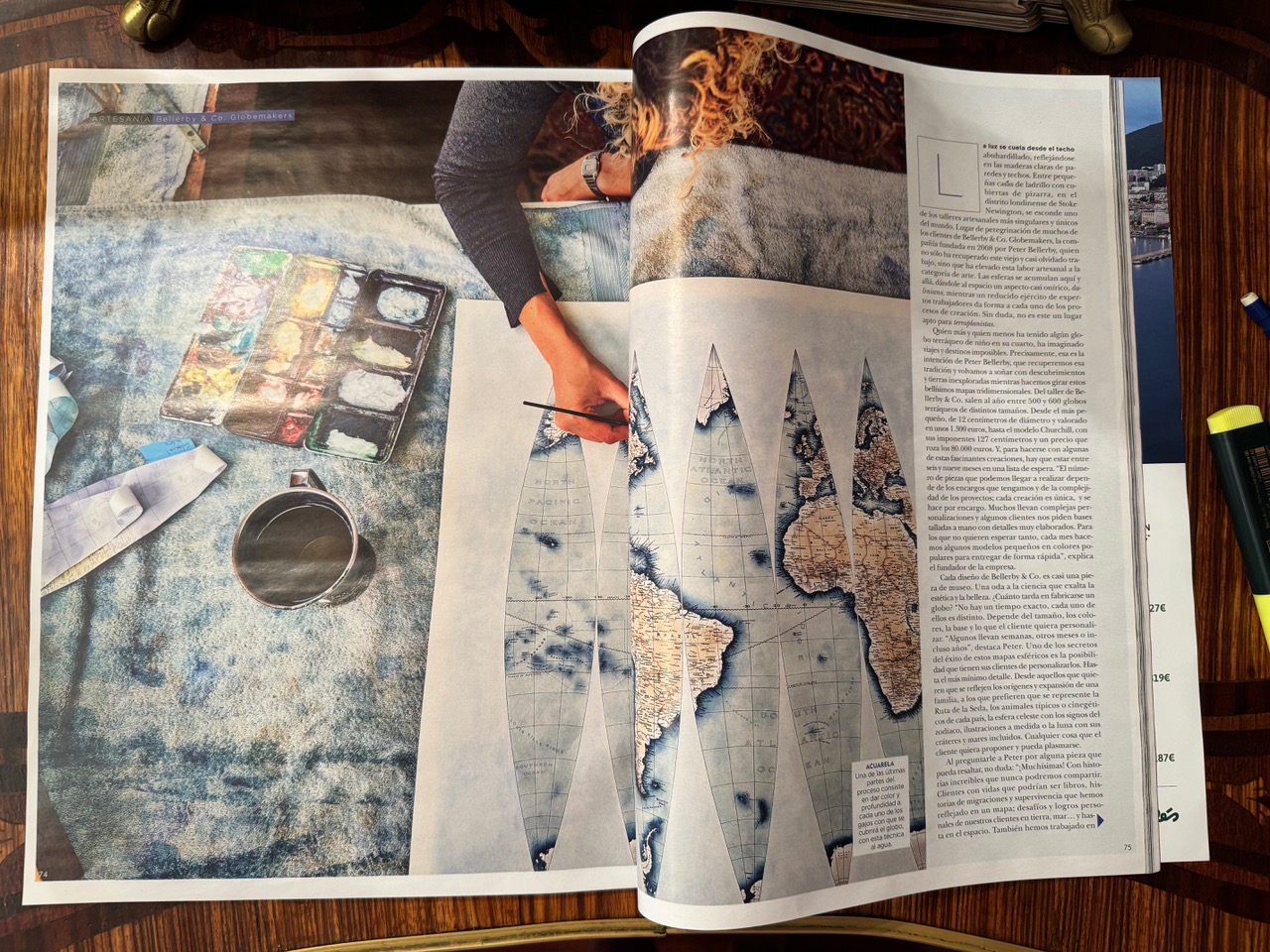
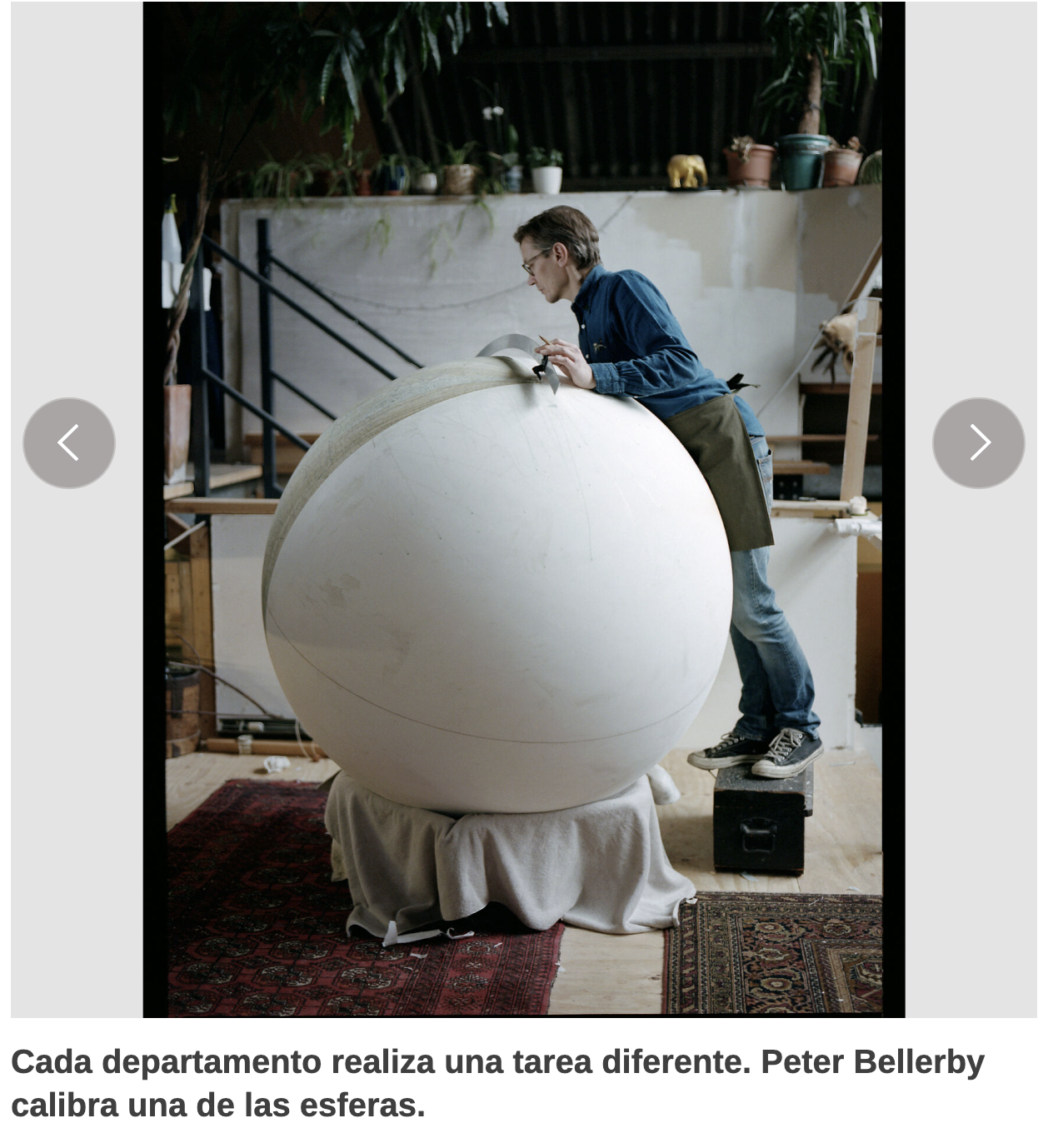
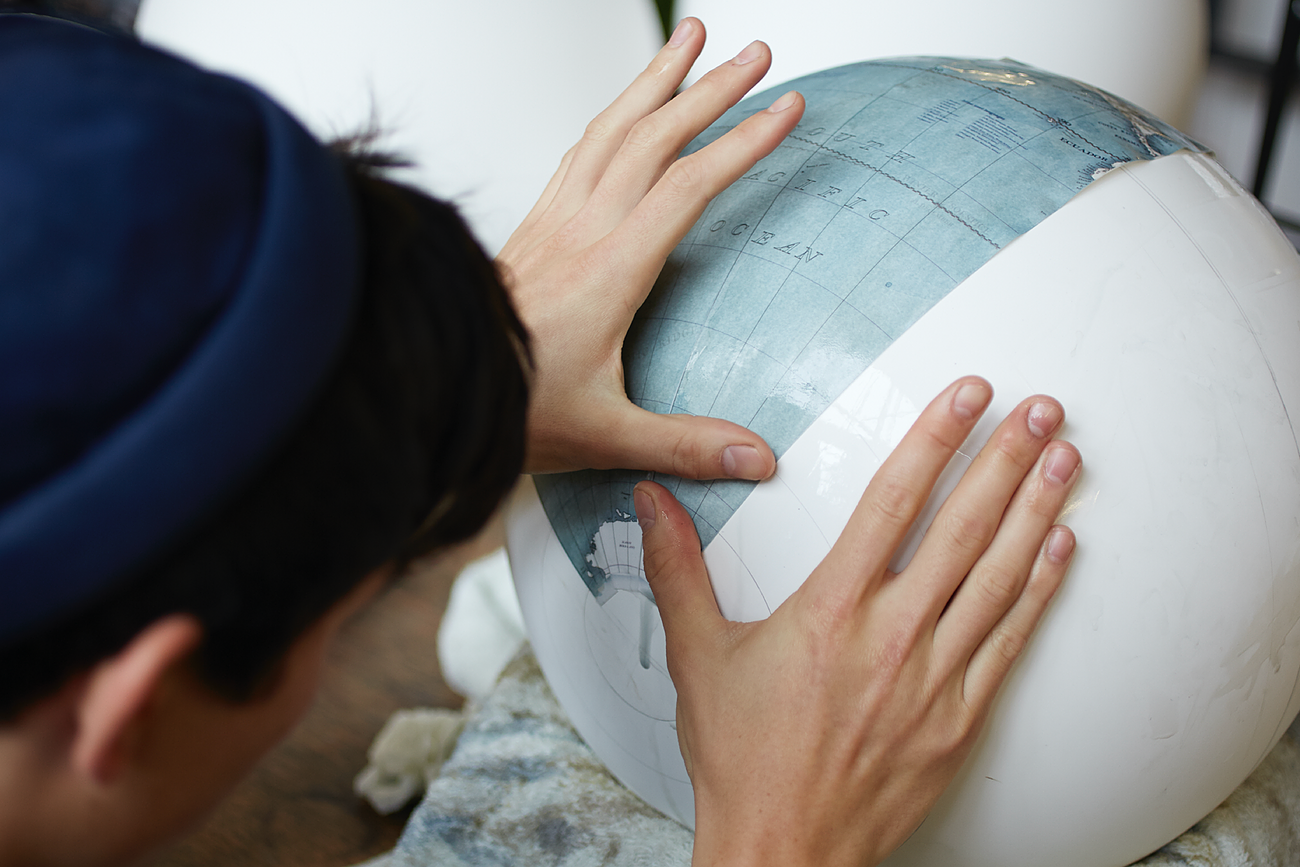
El proceso comienza con la fabricación de la esfera. Las de menor tamaño se elaboran en resina o fibra de vidrio, mientras que los modelos más grandes están hechos en finas y sólidas maderas, trabajadas a conciencia para lograr una superficie lisa y perfecta. Es uno de los procesos más delicados y precisos; el menor desajuste en el equilibrio y distribución de los pesos puede influir en el momento de hacerlo girar. Mientras que se consigue el orbe perfecto, el departamento de cartografía se dedica a elaborar el mapa. Es otro de los trabajos clave, las fronteras y los topónimos han de estar actualizados. Una vez terminado, se imprime en papel de alta calidad y se secciona en los gajos que han de ajustarse y pegarse al globo, un proceso que puede llevar más de una hora.

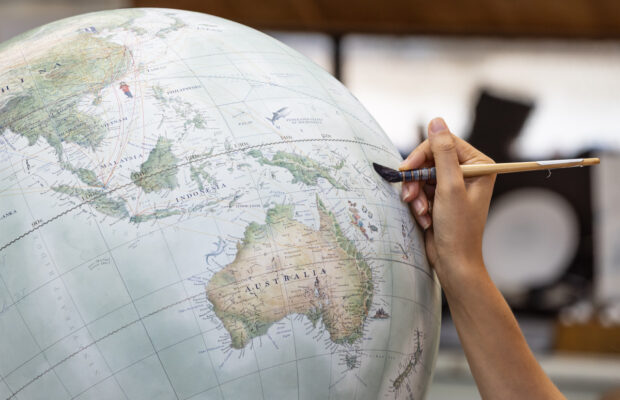
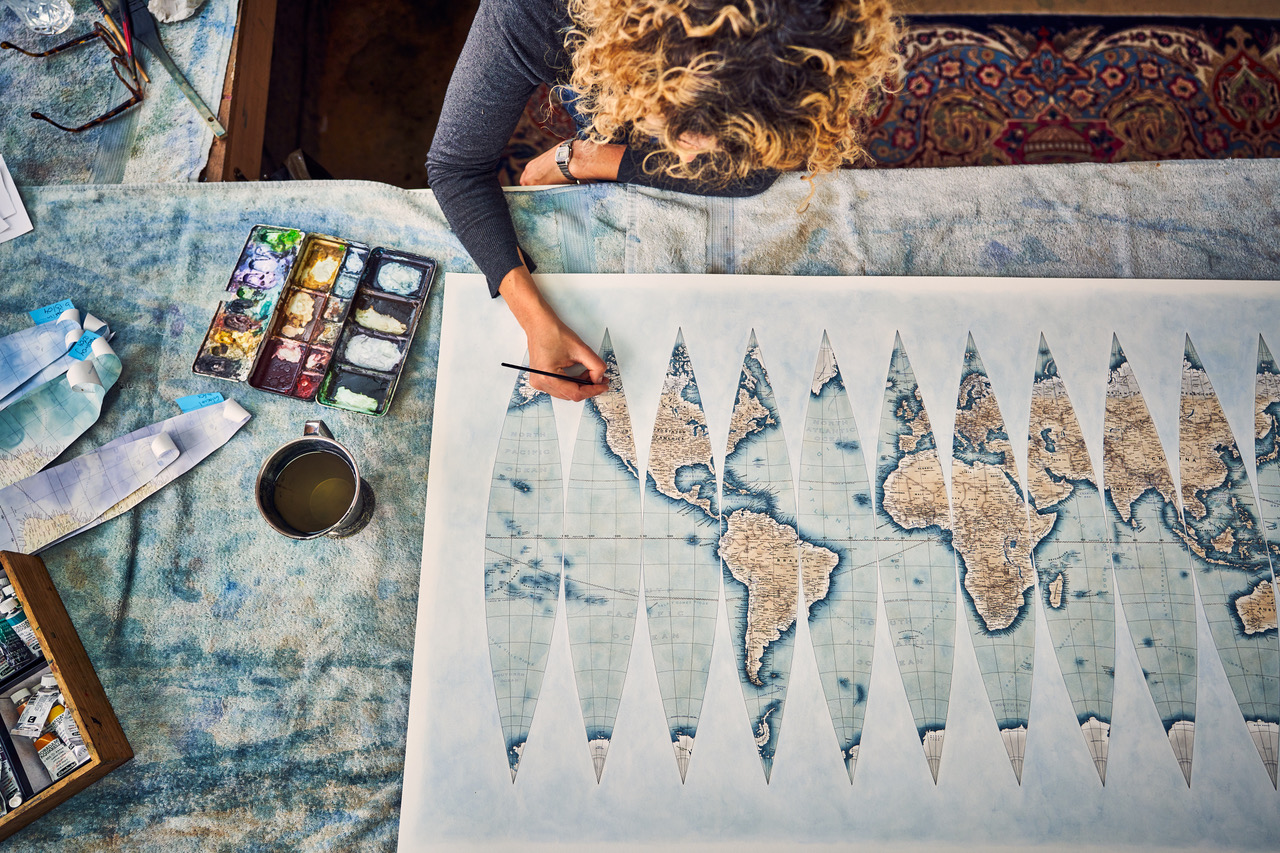
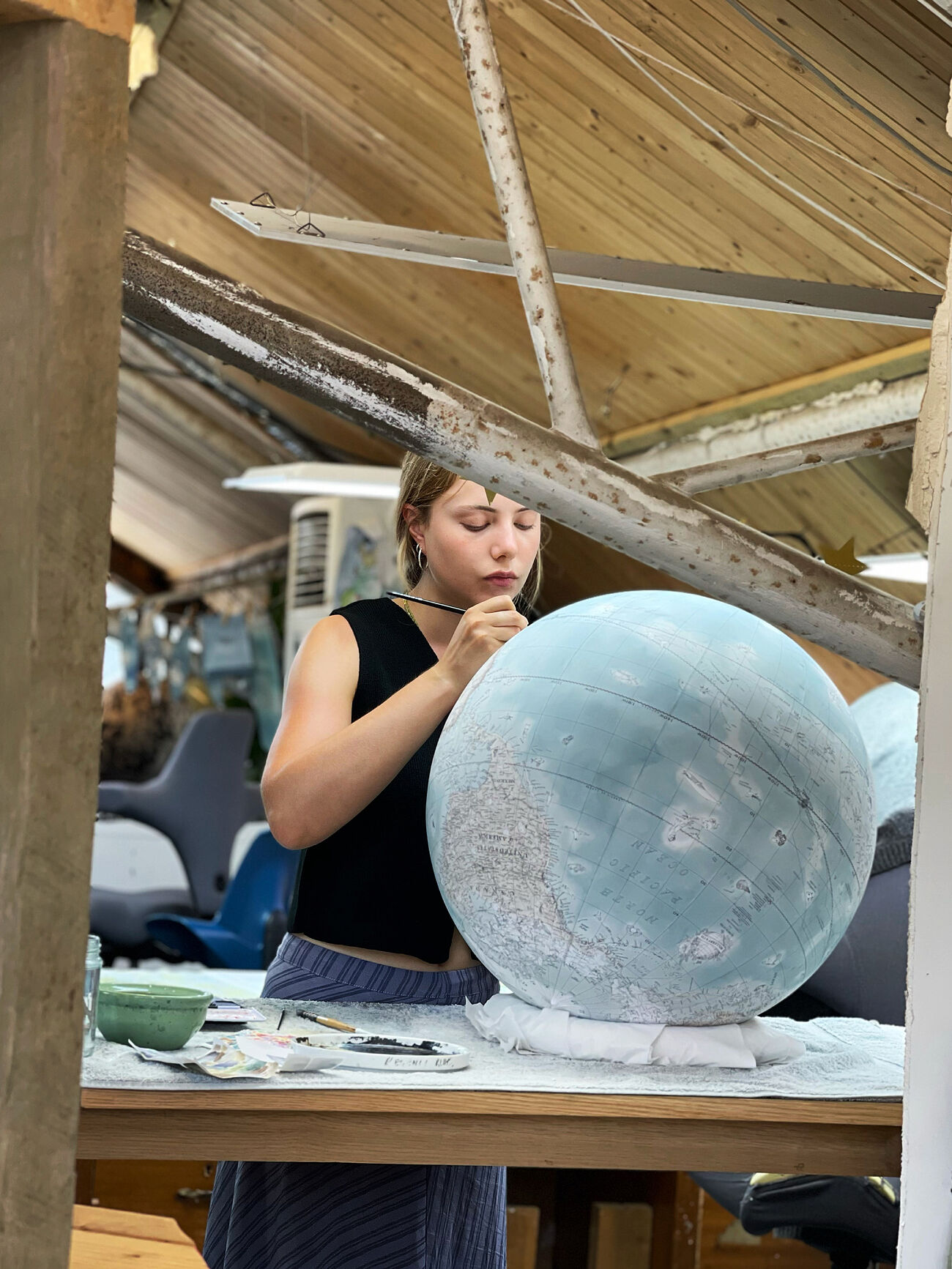
No cabe la más mínima imperfección: los cortes han de ser limpios y precisos como los de un cirujano; no se puede solapar ninguno de los fragmentos, tienen que ir al milímetro; ni quedar burbujas al encolar o que un mal movimiento pueda rasgarlo. Fallar en esta parte supondría tener que retirar todo el trabajo realizado y comenzar la operación desde cero. Una vez terminado y seco, se procede a pintar a mano con acuarelas todos los detalles, con tintas con una vida útil de entre 100 y 200 años, desde las profundidades de los océanos, ríos, fronteras, desiertos… y todos los detalles con los que el cliente lo haya querido personalizar. Tras aplicar varias capas de barniz, se coloca en la base, de metal o madera, de las más modernas a las más clásicas. La obra de arte estaría terminada y lista para ser empaquetada en una caja hecha a medida que la resguarde.
Lo que comenzó casi como un divertimento pronto se convirtió en todo un fenómeno. Desde amantes de la cartografía a personas con un alto sentido estético pusieron sus ojos en la pequeña compañía. En poco más de dos años su fama se había expandido por todo el mundo. Y su demanda creció al mismo ritmo que su fama, que se extendió desde la vieja Europa a Estados Unidos, Oriente Medio o Asia. Familias reales, coleccionistas privados, firmas de moda, encargos del Museo del Louvre… Alguno de los orbes ha llegado a aparecer en películas de Hollywood, de la mano de Martin Scorsese. “Este año repetiremos nuestra colaboración con Gieves & Hawkes, haremos algo emocionante con los almacenes Harrod’s, y pondremos en marcha un proyecto con una perfumería”, adelanta Peter, celoso de revelar los nombres de sus clientes.
En 2018 y 2021 fueron galardonados con los Premios de la Reina para Emprendedores, todo un reconocimiento en Gran Bretaña. “No fue para nada algo planeado, iba a ser un proyecto de unos meses. Nunca imaginé que se convertiría en un negocio. Pero me di cuenta de que había un nicho de mercado, así que en plena crisis financiera de 2008, dejé el negocio inmobiliario y decidí seguir adelante. Ya había invertido demasiado tiempo y dinero como para rendirme, así que me propuse ver hasta dónde podía llegar esta idea”.
En un tiempo en que aplicaciones como Google Earth ponen en un par de clics el mundo en la palma de nuestra mano, nada hacía presagiar que un arte casi desaparecido, como el diseño cartográfico y la construcción de globos terráqueos, iba a convertirse en objeto de deseo, de colección. La empresa británica es un claro ejemplo del renovado interés por los trabajos exclusivos y genuinos, alejados de la producción masiva en cadena.
Asegura Peter que Google Maps “no puede competir con lo que hacemos nosotros: un globo no es para ir del punto A al punto B, sino para inspirarte a viajar. La gente cada vez valora más los objetos con historia, hechos para durar. Aunque también tenemos que reconocer que, curiosamente, crecimos empresarialmente hablando gracias a las redes sociales y las nuevas tecnologías”.
La búsqueda de piezas únicas en una sociedad en la que prima la cultura del usar y tirar; reconociendo el valor del trabajo artesano y el amor por los detalles de lo bien hecho, se está convirtiendo en la seña de identidad de unas nuevas generaciones que buscan alejarse de ese consumismo desenfrenado y apostar por piezas que trasciendan en el tiempo. “Volviendo a la terquedad, también tengo la manía de querer que todo lo que poseo y, por lo tanto, todo lo que hago, sea súper resistente. Que no sólo sea bonito, sino que esté hecho para durar. Creo que eso ha sido clave para que hoy seamos la empresa que fabrica los globos terráqueos hechos a mano de mayor calidad en el mundo”, afirma el maestro artesano.

“Siempre estamos ampliando nuestro trabajo con nuevos tamaños, diseños y colaboraciones. En 2025 lanzaremos un globo celeste en el que hemos estado trabajado durante años”, señala.
Recuperar un arte del olvido no es en absoluto una tarea sencilla. La pasión por lo que se hace, la búsqueda de la excelencia y perder el miedo a fracasar en los inicios es parte de la fórmula del éxito para todos aquellos que deseen emprender en el mundo de la artesanía de lujo, como ha demostrado Peter Bellerby: “A los jóvenes les diría que se sientan orgullosos de su trabajo, que aprendan de los errores y que, de vez en cuando, dejen el teléfono y se tomen el tiempo de crear algo con sus manos”.
Light streams in from the sloping ceiling, reflecting off the light wood walls and ceilings. Hidden among small brick houses with slate roofs in the London borough of Stoke Newington is one of the most unique and singular artisan workshops in the world. A place of pilgrimage for many of the clients of Bellerby & Co. Globemakers, the company founded in 2008 by Peter Bellerby, who has not only revived this old and almost forgotten craft but has elevated this craftsmanship to the status of art. The spheres accumulate here and there, giving the space an almost dreamlike, Dalí-esque feel, while a small army of expert workers shapes each of the creative processes. This is certainly not a place for flat-earthers.
Everyone has had a globe in their bedroom as a child, imagining impossible journeys and destinations. That is precisely Peter Bellerby’s intention: to revive that tradition and once again dream of discoveries and unexplored lands while turning these beautiful three-dimensional maps. Between 500 and 600 globes of various sizes are produced each year from the Bellerby & Co. workshop. From the smallest, 12 centimeters in diameter and valued at around €1,300, to the Churchill model, with its imposing 127 centimeters and a price tag approaching €80,000. And to get your hands on some of these fascinating creations, you have to spend six to nine months on a waiting list. “The number of pieces we can make depends on the orders we receive and the complexity of the projects; each creation is unique and made to order. Many have complex customizations, and some clients request hand-carved bases with intricate details. For those who don’t want to wait that long, we make a few small models in popular colors each month for quick delivery,” explains the company’s founder.
Each Bellerby & Co. design is almost a museum piece. An ode to science that exalts aesthetics and beauty. How long does it take to make a globe? “There’s no exact time; each one is different. It depends on the size, colors, base, and what the customer wants to customize. “Some take weeks, others months, or even years,” Peter emphasizes. One of the secrets to the success of these spherical maps is the ability for their customers to customize them, down to the smallest detail. From those who want the origins and expansion of a family to be reflected, to those who prefer the Silk Road, typical or game animals of each country, the celestial sphere with the signs of the zodiac, custom illustrations, or the moon with its craters and seas included. Anything the client wants to propose and can be captured.
It all started with a gift. In 2008, Peter Bellerby, a well-known television producer and real estate agent, wanted to surprise his father for his 88th birthday with something special: a globe. Since he didn’t like what he found on the market or it was beyond his budget, he decided to make it himself. The process was more complicated than he had originally anticipated. “I’ve always been very stubborn,” he admits, so for two years he experimented repeatedly with a wide variety of materials and techniques. He faced all kinds of challenges, such as materials that broke or difficulties with cartography, but “I’m not one to give up easily; every day was a new challenge,” he assures. The process alone of creating a perfect globe (he had to enlist the help of a Formula 1 manufacturer) prompted him to write an entire chapter in his book, *The Globe Makers*. “Overcoming obstacles became part of my daily life,” he says.
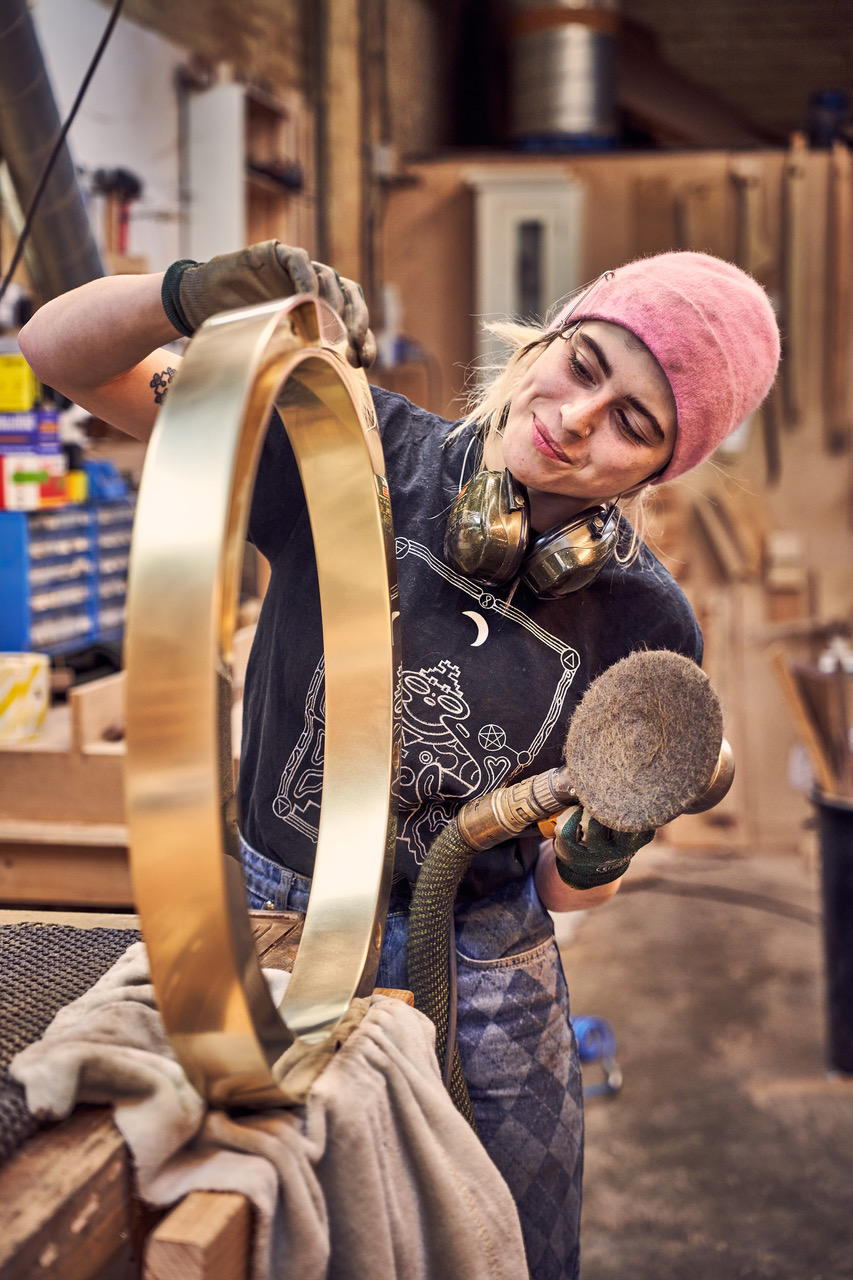
From humble beginnings in their own home, the company has grown to meet demand without losing an ounce of quality: “Depending on the day, we have up to 30 people in the studio. The team includes artisans, painters, carpenters, metalworkers, an engraver, an illustrator, and cartographers. We look for talented people with an eye for detail. It’s key to know how to slow down, be a perfectionist, and have a lot of patience,” explains the founder, who always strives to ensure sustainable production.
The process begins with the manufacture of the sphere. The smaller ones are made of resin or fiberglass, while the larger models are made of fine, solid wood, painstakingly crafted to achieve a perfectly smooth surface. This is one of the most delicate and precise processes; the slightest imbalance in the balance and distribution of weights can influence the rotational speed. While the perfect orb is being achieved, the cartography department is dedicated to creating the map. This is another key task; the borders and place names must be up-to-date. Once completed, it is printed on high-quality paper and sectioned into segments that must be fitted and glued to the globe, a process that can take more than an hour.
There must be no room for the slightest imperfection: the cuts must be clean and precise, like those of a surgeon; none of the fragments can overlap; they must be precise to the millimeter; and there must be no bubbles when gluing, or the possibility of a wrong movement tearing it. Failing at this point would mean having to undo all the work and start the operation from scratch. Once finished and dry, all the details are hand-painted with watercolors, using inks with a shelf life of between 100 and 200 years, from the depths of the oceans, rivers, borders, deserts… and all the details with which the client has wished to personalize it. After applying several coats of varnish, it is placed on the base, made of metal or wood, from the most modern to the most classic. The work of art would be finished and ready to be packed in a custom-made box for its protection.
What began almost as a hobby soon became a phenomenon. From cartography enthusiasts to people with a keen aesthetic sense all turned their eyes to the small company. In just over two years, its fame had spread throughout the world. And its demand grew at the same pace as its fame, which spread from old Europe to the United States, the Middle East, and Asia. Royal families, private collectors, fashion brands, commissions from the Louvre Museum… Some of the orbs have even appeared in Hollywood films, directed by Martin Scorsese. “This year we will repeat our collaboration with Gieves & Hawkes, do something exciting with Harrods, and launch a project with a perfumery,” reveals Peter, cautious about revealing the names of his clients.
In 2018 and 2021, they were awarded the Queen’s Awards for Entrepreneurship, a significant recognition in Great Britain. “It wasn’t planned at all; it was just going to be a project for a few months. I never imagined it would turn into a business. But I realized there was a niche market, so in the midst of the 2008 financial crisis, I left the property business and decided to move forward. I’d already invested too much time and money to give up, so I decided to see how far this idea could go.”
At a time when applications like Google Earth put the world in the palm of our hands in just a few clicks, nothing suggested that a nearly extinct art, such as cartographic design and globe construction, would become a desirable and collectible object. The British company is a clear example of the renewed interest in exclusive and authentic works, removed from mass-produced production.
Peter asserts that Google Maps “can’t compete with what we do: a globe isn’t meant to get you from point A to point B, but to inspire you to travel. People increasingly value objects with a history, made to last. Although we also have to recognize that, interestingly, we grew business-wise thanks to social media and new technologies.”
The search for unique pieces in a society dominated by a throwaway culture; recognizing the value of artisan work and a love for the details of a well-made product; is becoming the hallmark of new generations seeking to distance themselves from rampant consumerism and opt for pieces that will transcend time. “Returning to stubbornness, I also have a habit of wanting everything I own, and therefore everything I make, to be super durable. Not only beautiful, but made to last. I think that has been key to our position today as the company that makes the highest-quality handmade globes in the world,” says the master craftsman.
“We’re always expanding our work with new sizes, designs, and collaborations. In 2025, we’ll launch a celestial balloon that we’ve been working on for years,” he notes.
Recovering an art form from obscurity is by no means a simple task. Passion for what you do, the pursuit of excellence, and overcoming the fear of failing at the outset are part of the formula for success for all those who wish to venture into the world of luxury craftsmanship, as Peter Bellerby has demonstrated: “I would tell young people to be proud of their work, learn from their mistakes, and, from time to time, put down their phones and take the time to create something with their hands.”